
[제6장] 남원의 피랍 도공들 (하) — 아리타 도예 공동체를 이끈 백자의 어머니 백파선
제6장: 피랍 도공들 (하) — 아리타 도예 공동체를 이끈 백자의 어머니, 백파선(百婆仙)
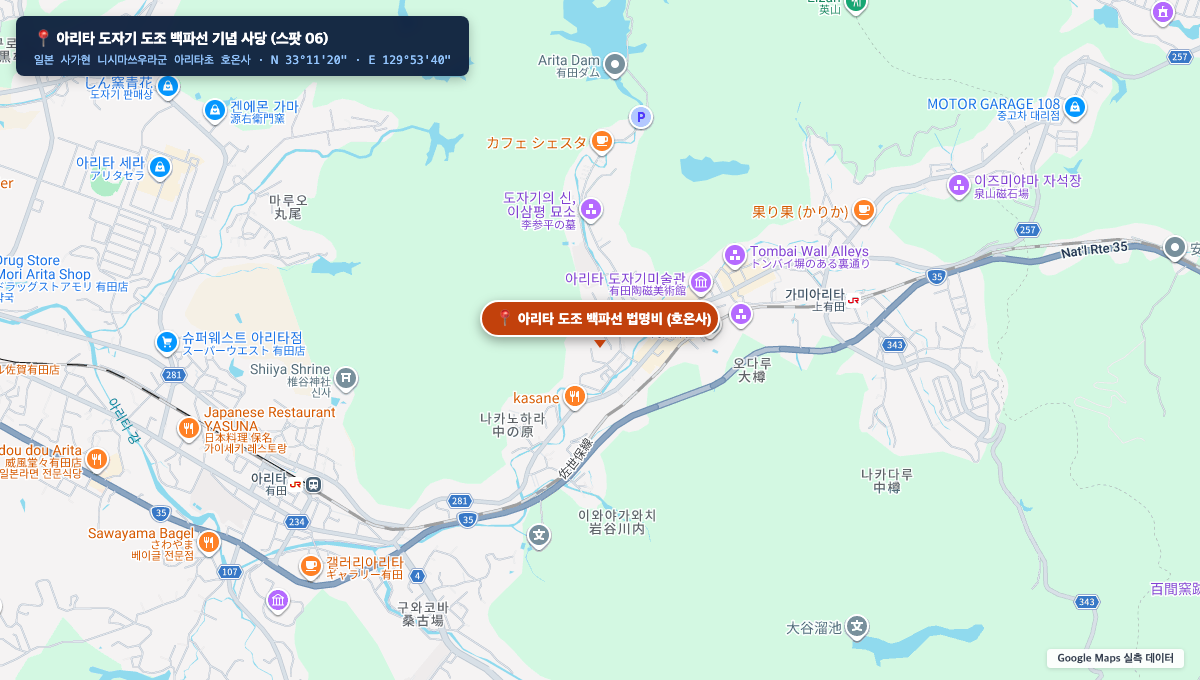
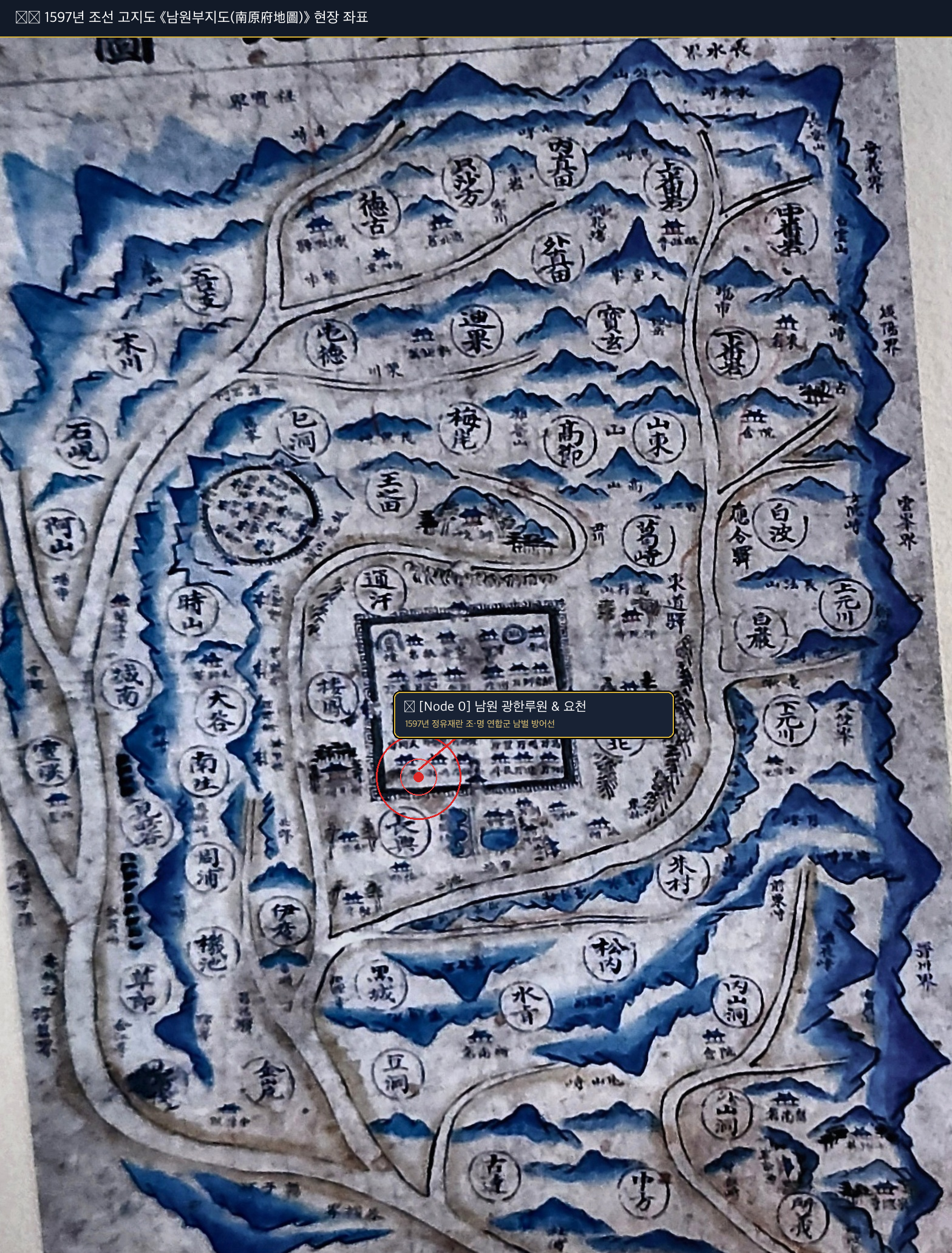
▲ [현장 실측 지도] 구글 맵(Google Maps)으로 확인하는 일본 규슈 사가현 아리타 백파선 묘비 및 호온사(報恩寺) 현대 좌표
위치: 한반도(전승상 남원·진해 웅천 등 거론) ➔ 일본 규슈 사가현 다케오 ➔ 아리타(有田) 호온사(報恩寺) 및 도산신사(陶山神社) (N 33°11'20" · E 129°53'40")
시대 배경: 1590년대 전란기 도일 ➔ 1618년 남편 사후 아리타 이주 ➔ 1656년 타계 (향년 96세)
주요 인물: 백파선(사후 법명 萬了妙泰道婆, 1560~1656), 남편(일본 측 기록상 '신타로', 법명 덴시쓰 소덴, 조선식 본명 미상), 도조 이삼평(李參平), 조선계 도공 공동체
1. 스팟 맵 오프닝 아리타 도예 공동체를 이끈 조선계 여성 지도자
우리는 지금 어디에 서 있는가? 임진·정유재란의 전화 속에서 바다를 건너, 일본 규슈 사가현 서부 산악 분지에 자리한 도자기의 명산지 아리타(有田) 호온사(報恩寺)의 고즈넉한 경내, 《백파선(百婆仙) 묘비》 앞에 서 있습니다.
일본을 대표하는 도자기이자 17~18세기 네덜란드 동인도회사(VOC) 무역선을 타고 유럽으로 뻗어나간 '아리타·이마리 도자기(有田·伊萬里 燒)'. 임진왜란 이전까지 흙을 고열로 구워내는 경질 자기 제조 기술이 부족했던 일본 열도에, 바다를 건너온 조선계 장인들은 획기적인 기술적 전환을 가져왔습니다.
그 역사적 흐름의 중심에는 남편을 잃은 시련 속에서도 도공 일족과 공동체를 통솔하여 아리타로 이주시키고 가마의 정착을 이끈 조선 출신의 여성, 훗날 '백파선(百婆仙)'으로 불리게 된 지도자가 있었습니다.
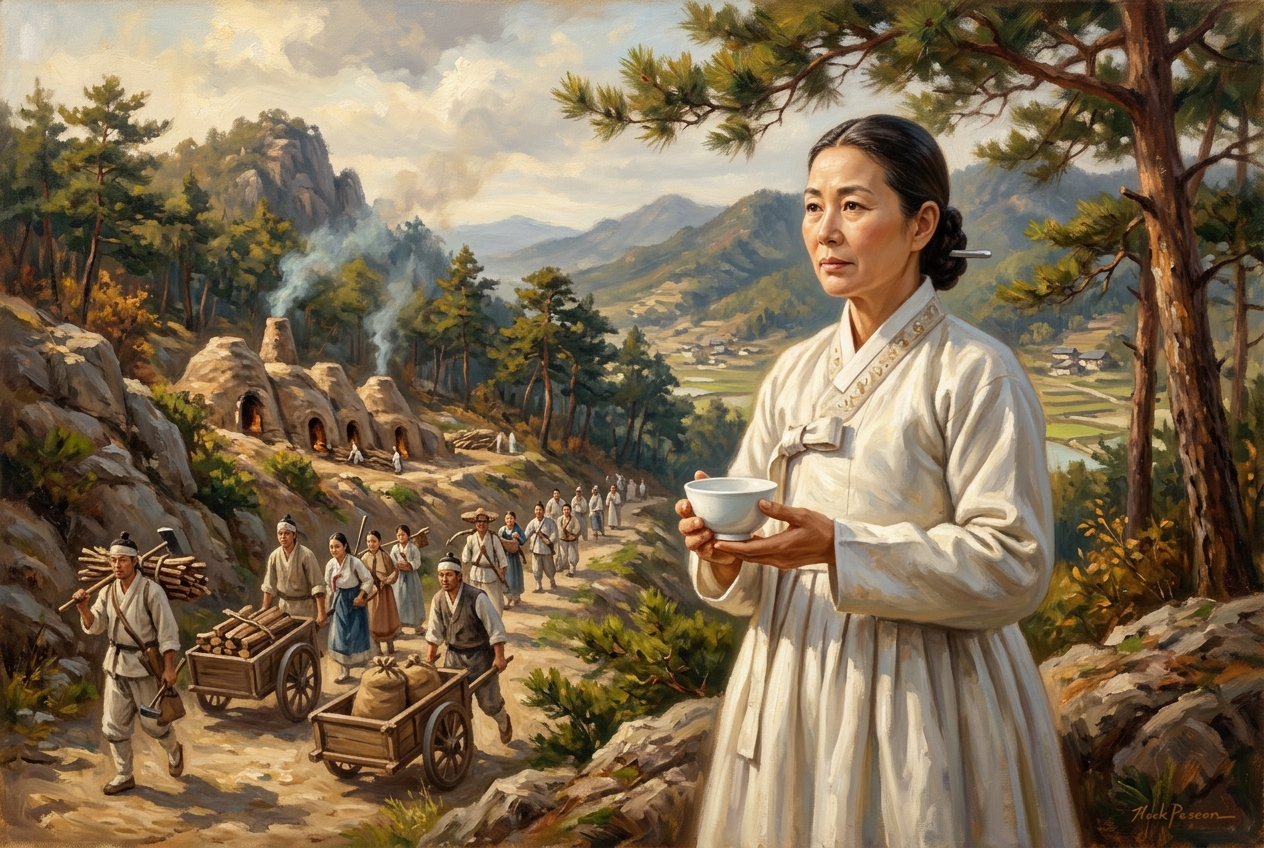
▲ [역사 복원화] 조선 도공 공동체를 이끌고 아리타로 향하는 백파선 (상상 재현화) — 남편 사후 도공 일족을 결속시켜, 양질의 도석이 발견된 아리타로 이주를 결단하는 지도자 백파선. 낯선 이국땅에서 도공 공동체의 자립과 미래를 이끈 여성 지도자의 모습을 상상 재현한 그림입니다.
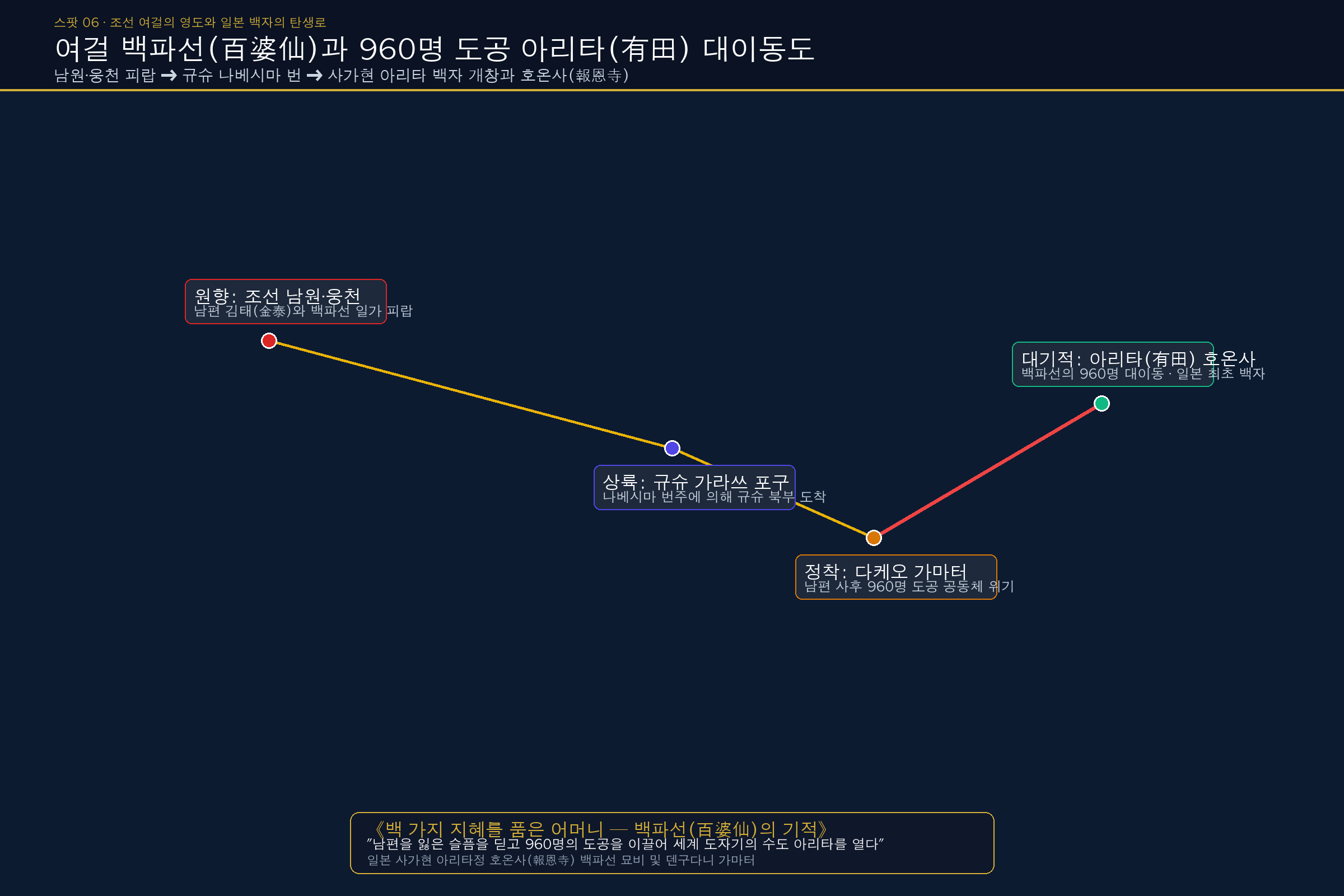
▲ [스팟 위치지도] 규슈 다케오에서 사가현 아리타로 이어진 도공 공동체 이주 경로도 — 1590년대 건너온 도공 일가가 다케오 우치다 가마에 머물다, 1618년경 남편 사후 백파선의 통솔 아래 질 좋은 도석 산지인 아리타 히에코바(稗古場) 방면으로 이주한 역사적 이동 경로를 보여주는 지도입니다(관련 기록 및 전승을 바탕으로 재구성).
2. 시간과 인물의 타임라인 이국땅에서 도예 공동체를 일궈낸 96세의 삶
'백파선'이라는 이름은 본래의 실명이 아닙니다. 1705년 건립된 호온사(報恩寺) 묘비에 새겨진 사후 법명은 '만료묘태도파(萬了妙泰道婆)'이며, '백파선(百婆仙)'은 훗날 후손들과 지역 공동체에서 '백 살 가까이 지혜와 덕을 베푼 존경받는 어머니'라는 뜻으로 부르기 시작한 존칭입니다. 초기 사료에는 부부의 정확한 조선 내 출신지와 본명이 명시되어 있지 않으나, 96세라는 장수를 누리며 도공 공동체를 통솔하고 아리타 도예의 기틀을 다진 그녀의 삶은 한·일 문화 교류사에서 독보적인 여성 리더십의 사례로 꼽힙니다.
| 역사적 단계 | 전란기 도일과 다케오 정착 | 남편(후카우미 가문 시조) 별세 | 아리타 히에코바 가마 이주 | 아리타 백자 생산과 공동체 성장 | 96세 타계와 1705년 묘비 건립 |
|---|---|---|---|---|---|
| 연대 / 시기 | 1590년대 전란기 | 1618년 (광해군 10년) | 1618년 전후 | 1620년대 ~ 1640년대 | 1656년 타계 / 1705년 묘비 |
| 핵심 사건 | 도공 부부, 규슈 다케오 우치다 가마 안착 | 우치다 가마 열었던 남편 별세 | 백파선, 도공 공동체 이끌고 아리타 이주 | 히에코바 등 아리타 가마 요업 번창 | 향년 96세 타계, 1705년 호온사 묘비 건립 |
| 역사적 의의 | 조선 도공 기술진의 규슈 정착 | 공동체의 위기와 여성 지도자의 결단 | 도석 산지 아리타로 이동하여 자립 | 아리타 자기 발전과 도예 마을 형성 | '만료묘태도파' 법명 및 '백파선' 존칭 추앙 |
3. 팩트 중심의 역사적 스토리 전개
1. 전란기 도일과 다케오 우치다 가마의 출발
1590년대 임진·정유재란 당시 규슈 사가 번의 나베시마 가문 등 왜군 지휘관들은 호남과 남해안 일대를 거치며 다수의 도공을 일본으로 연행했습니다. 훗날 백파선으로 불린 여성과 그녀의 남편(일본 측 기록상 '신타로'로 불리며 사후 법명은 '덴시쓰 소덴')은 규슈 사가현 다케오(武雄)의 우치다(內田) 가마터에 정착하여 도기를 굽기 시작했습니다. 이들 부부와 도공들의 활약으로 우치다 가마는 사가 번의 초기 도자 생산 거점으로 성장했으나, 1618년 남편이 세상을 떠나면서 도공 공동체는 새로운 전환점을 맞이했습니다.
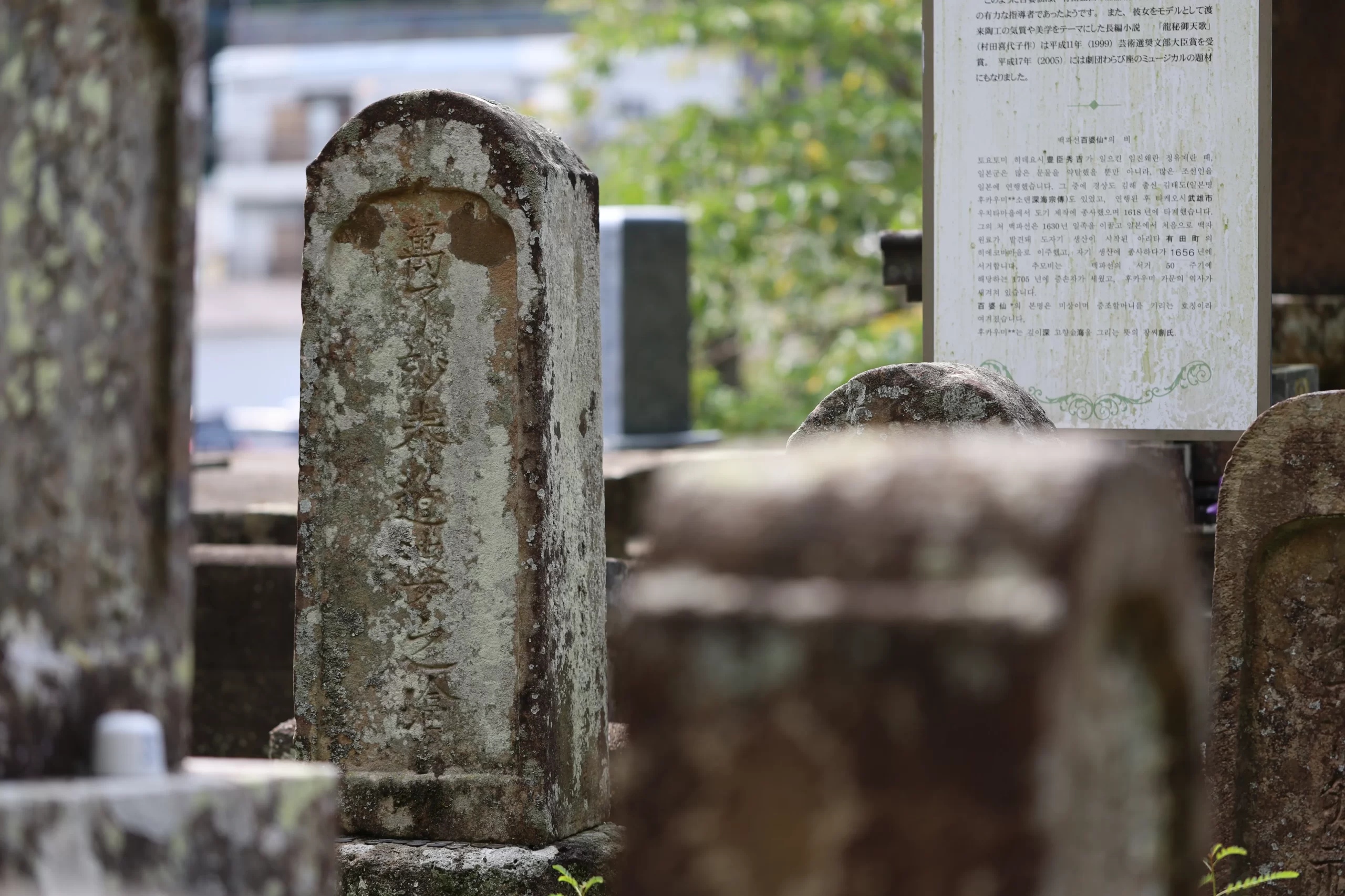
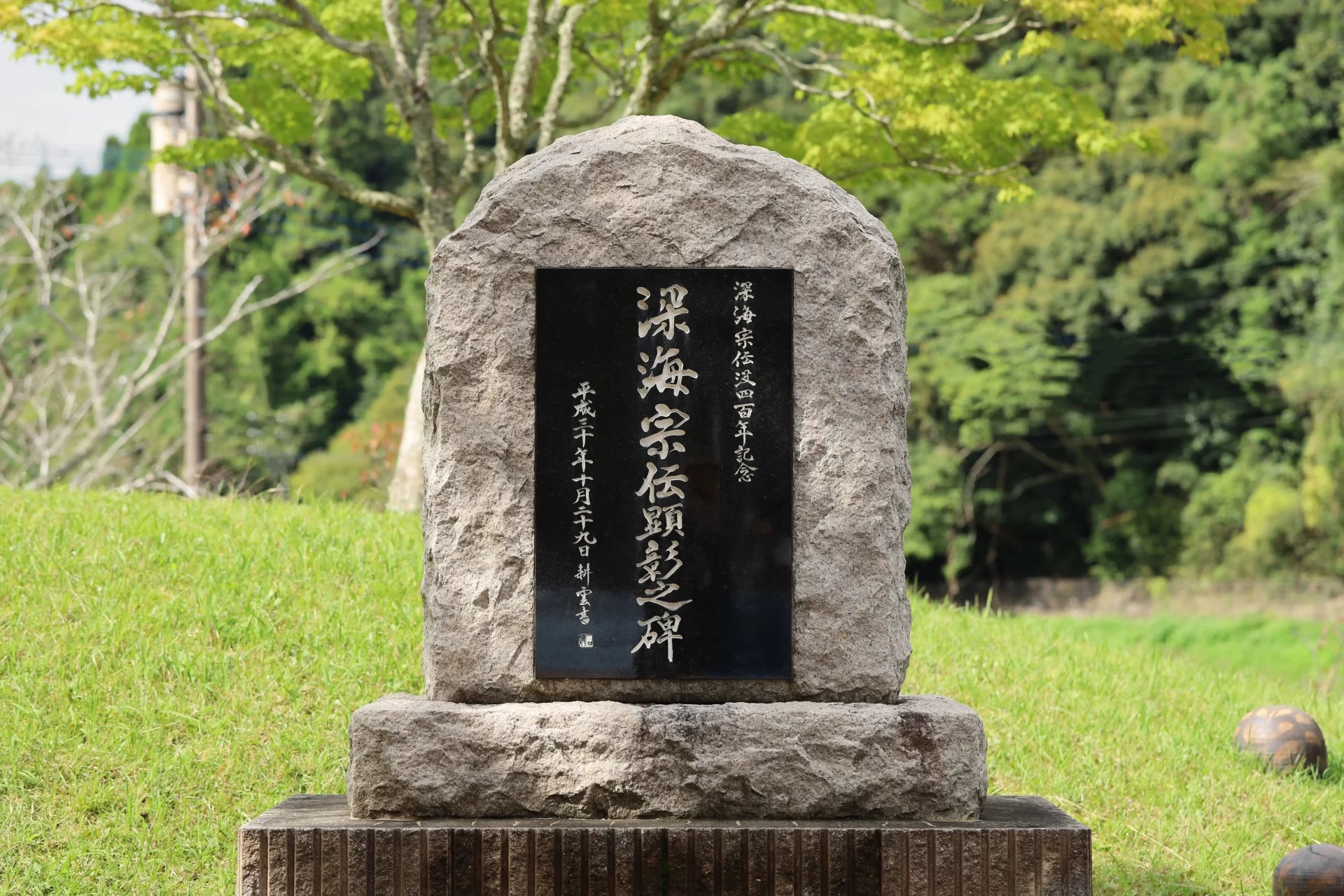
▲ [박물관 유물 도판] 일본 사가현 아리타 호온사(報恩寺) 경내의 《백파선 묘비(萬了妙泰道婆之塔)》 실물 원본 — 1705년 백파선의 증손자인 후카우미 소센(深海宗仙)이 건립한 석비(높이 약 1m). 비문에는 1590년대 조선에서 건너온 선조들의 내력과, 남편 사후 일족을 이끌고 아리타로 이주하여 도예의 터전을 넓힌 백파선(사후 법명 만료묘태도파)의 덕망이 기록되어 있습니다.
2. 공동체의 위기와 아리타 이주 결단
가문의 중심이었던 남편이 세상을 떠난 뒤, 백파선은 도공 일족과 기술자들을 규합하는 중심 역할을 맡았습니다. 1616년 조선 출신 도공 이삼평(李參平)이 아리타 이즈미야마(泉山)에서 양질의 자석(도석)을 발견하면서 아리타 일대는 일본 최초의 백자 생산 중심지로 급부상하고 있었습니다.
백파선은 일족의 미래와 요업의 지속적 발전을 위해 다케오를 떠나 아리타의 히에코바(稗古場) 방면으로 이주를 단행했습니다. 도공 일족을 이끌고 산을 넘어 새로운 도예 터전에 안착한 그녀의 통솔력은, 낯선 환경 속에서도 도공 공동체가 와해되지 않고 번영하는 중요한 기반이 되었습니다.
▲ [박물관 유물 도판] 백파선의 남편(법명 덴시쓰 소덴) 관련 사찰 연혁 편액 — 다케오 우치다 가마를 열었던 조선계 장인과 후카우미(深海) 가문의 발자취를 전하는 기록물입니다. 부부의 본래 조선식 실명은 초기 사료에서 확인되지 않으며, 후대에 가문과 지역에서 '심연' 등으로 추정되기도 했습니다.
3. 이즈미야마 도석과 아리타 도예 공동체의 도약
아리타에서 백파선 일족은 히에코바 가마를 중심으로 조선 전통의 오름가마를 운용하며 우수한 자기를 생산했습니다. 이삼평이 덴구다니 가마에서 백자를 성공적으로 소성하며 '도조(陶祖)'로 기려졌다면, 백파선은 일족과 장인들을 자애롭게 이끌며 아리타 요업의 정착과 공동체 발전을 뒷받침한 핵심 지도자였습니다.
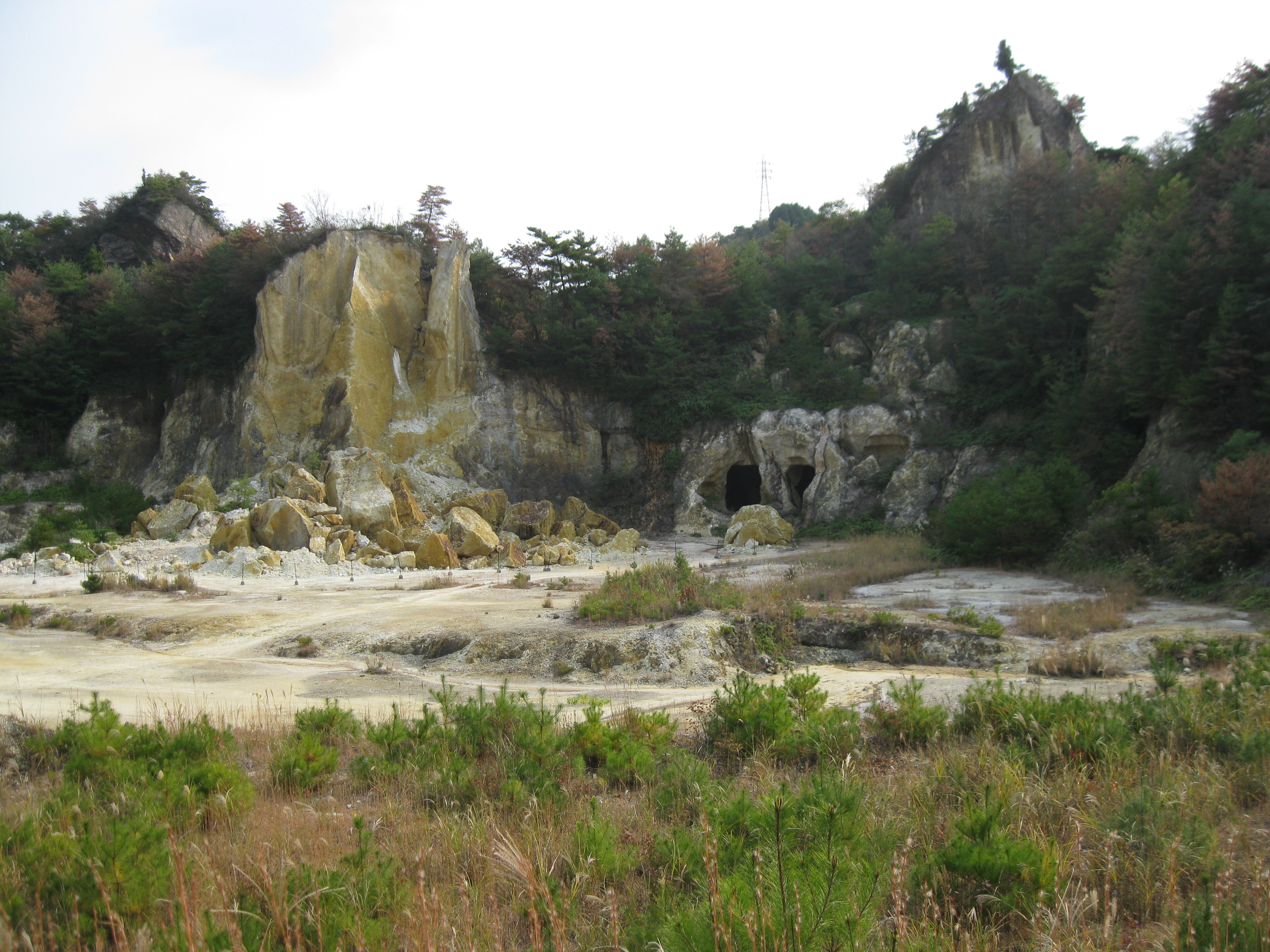
▲ [박물관 유물 도판] 아리타 백자 탄생의 산실 이즈미야마(泉山) 도석 채굴장 유적 (일본 국가지정 사적) — 산 전체가 질 좋은 자석(磁石)으로 이루어진 광산으로, 조선 도공들이 이 암석을 분쇄·정제함으로써 고열을 견디는 순백의 자기를 구워낼 수 있게 되었습니다.
백파선의 보살핌과 통솔 아래 후카우미 가문과 도공들은 정교한 백자와 청화백자를 생산하며 아리타 도예의 중요한 주역으로 성장했습니다.
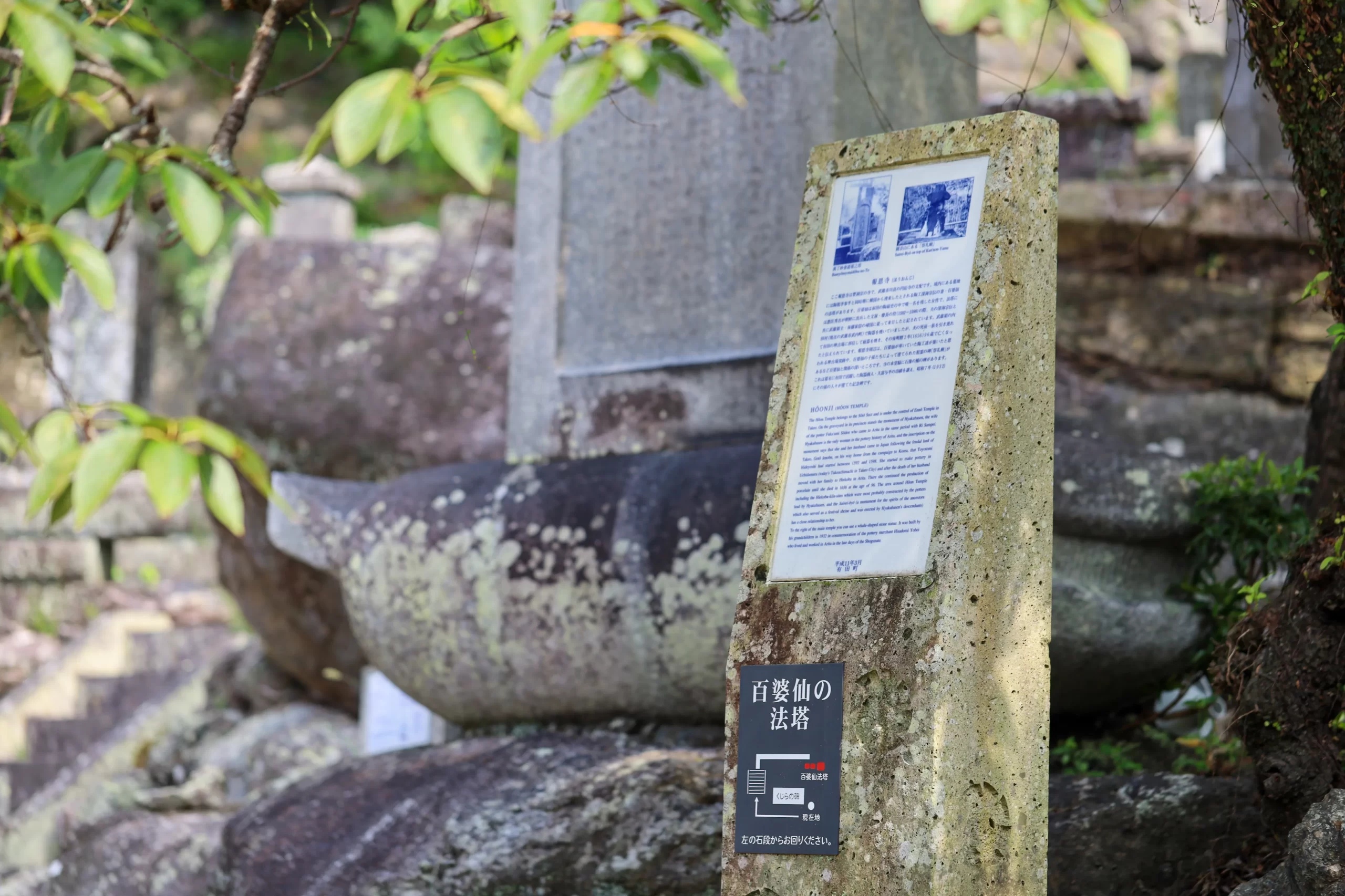
▲ [박물관 유물 도판] 일본 사가현 아리타 호온사 경내 《백파선의 법탑(百婆仙の法塔)》 공식 안내 석주와 해설판 — 남편 사후 일족을 이끌고 아리타로 이주하여 도예 마을 발전에 기여한 그녀의 생애를 기리고 있습니다.
4. 세계로 뻗어나간 아리타 도자기와 백파선의 유산
17세기 중반 중국 명·청 교체기의 전란으로 중국 자기 수출이 중단되자, 네덜란드 동인도회사(VOC)는 아리타 자기를 대량으로 수입하여 유럽 전역으로 수출했습니다. 아리타의 백자들은 유럽 귀족 사회에서 큰 인기를 끌며 세계적인 명성을 얻었습니다.
아리타 도예의 발전에는 이처럼 바다를 건너와 기술을 전파하고 가마를 일군 조선 도공들의 땀방울이 깊게 배어 있습니다. 아리타 도산신사(陶山神社)에는 도조 이삼평을 비롯한 도예 선구자들을 기리는 청화백자 도리이가 건립되어 오늘날까지 도예인들의 긍지를 전하고 있습니다.
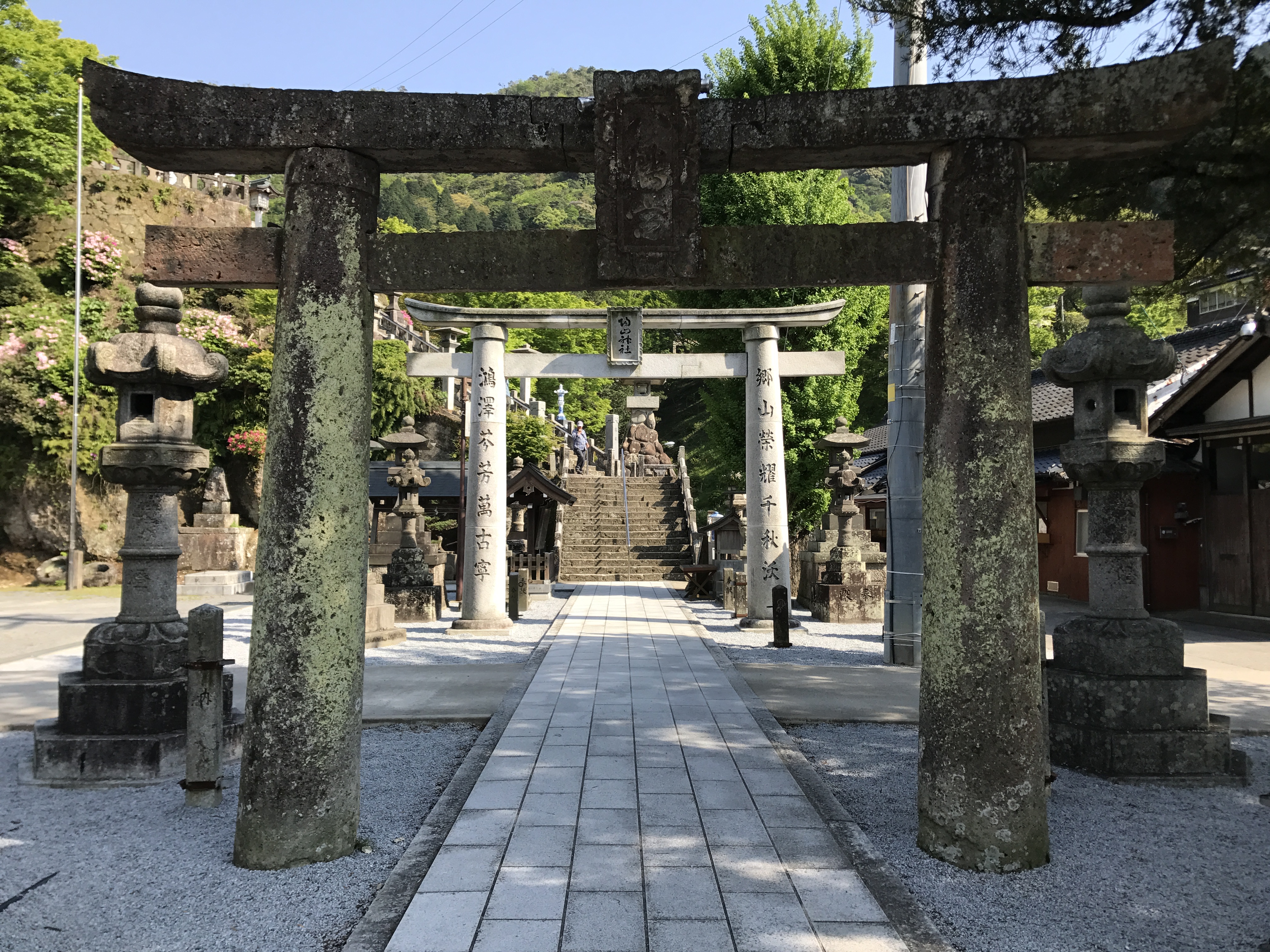
▲ [박물관 유물 도판] 아리타 도산신사(陶山神社)의 백자 도리이 — 순백의 도자기로 제작된 신사 문루(일본 등록유형문화재). 아리타 도자기 번영의 뿌리에 조선계 도공들의 헌신과 기술이 있었음을 상징하는 조형물입니다.
1656년 음력 3월 10일, 백파선은 향년 96세로 타계했습니다. 1705년 증손 후카우미 소센은 호온사에 묘비를 세우고, 사후 법명인 '만료묘태도파(萬了妙泰道婆)'를 새겼으며, 후대에는 '백 살 가까이 지혜를 베푼 자애로운 어머니'라는 뜻의 '백파선(百婆仙)'으로 널리 추앙받았습니다. 타국에서의 고난 속에서도 도공 공동체를 지키고 번영시킨 그녀는 한·일 문화 교류사의 뜻깊은 여성 지도자로 기억되고 있습니다.
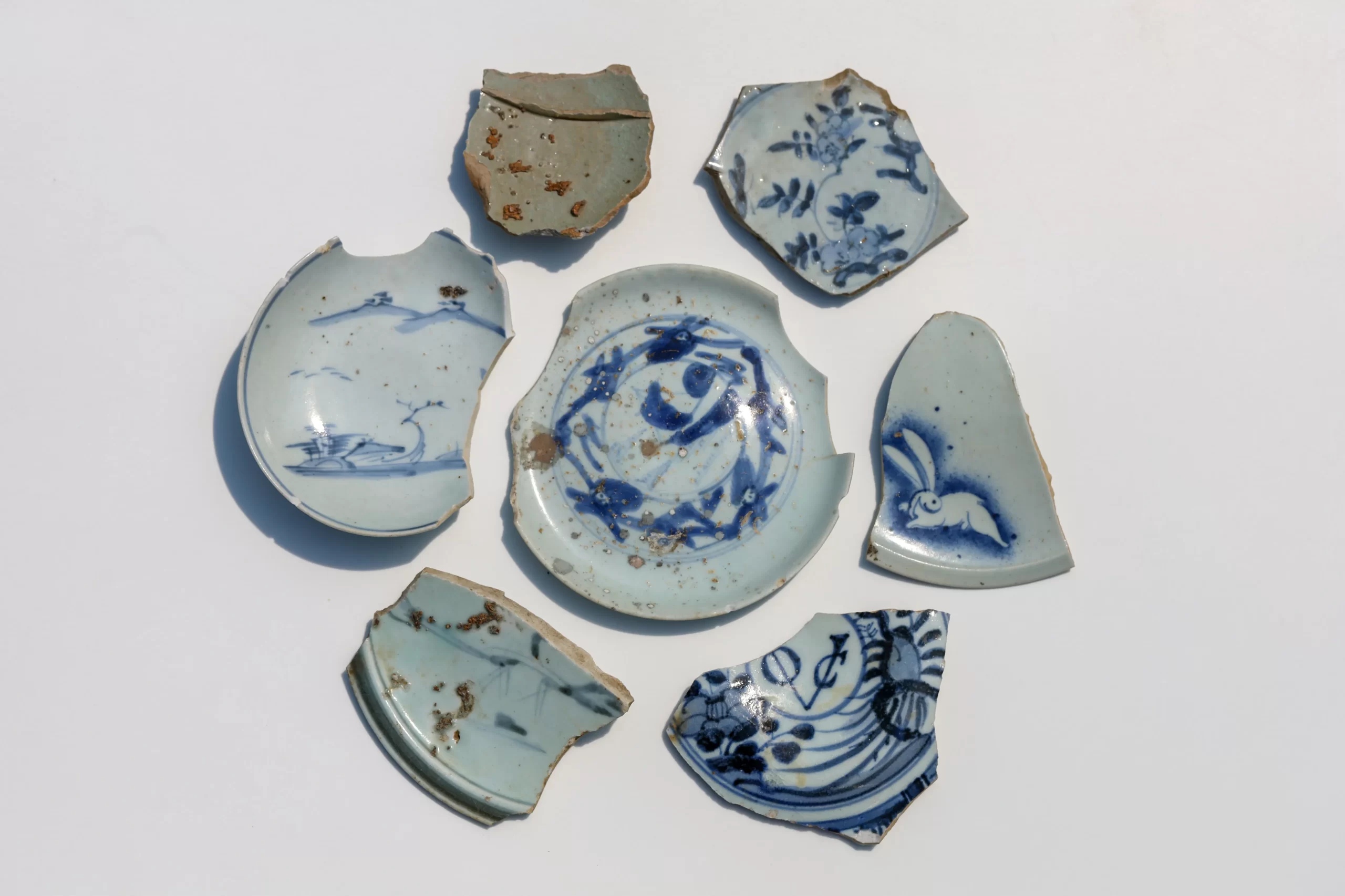
▲ [박물관 유물 도판] 초기 아리타 가마터 출토 청화백자 사발 파편 — 조선 백자의 담백한 조형미와 푸른 코발트 안료의 특징을 보여주는 17세기 전반의 유물(아리타 도자기 역사자료관 소장).
4. 스토리텔링 8컷 만화 릴스 — 도공 공동체를 이끈 백자의 어머니, 백파선
8컷 역사 만화로 읽는 도예 지도자 백파선의 생애
8컷 역사 만화는 남편 사후 도공 일족을 이끌고 아리타에 정착하여, 도예 공동체의 자립과 번영을 일구어낸 여성 지도자 백파선의 생애를 조명합니다.
- 도일의 시련과 다케오 가마터 (1~3컷): 1590년대 전란의 소용돌이 속에서 규슈 다케오로 건너간 백파선 일가. 남편과 함께 가마를 세우고 도기를 구웠으나, 1618년 남편이 세상을 떠나자 도공 공동체는 큰 시련을 맞이합니다.
- 여성 지도자의 결단과 아리타 이주 (4~6컷): 백파선은 슬픔을 딛고 도공 일족을 결속시킵니다. 질 좋은 도석이 발견된 아리타로 이주하여, 히에코바 가마를 중심으로 조선식 오름가마를 세우며 도예 마을 정착에 힘씁니다.
- 아리타 자기의 발전과 영원한 추모 (7~8컷): 도공들이 빚어낸 백자는 훗날 해외로 수출되며 명성을 얻습니다. 96세로 타계할 때까지 공동체의 기둥으로 헌신한 백파선. 호온사에 우뚝 선 묘비는 타국에서 피어난 조선 도공들의 긍지를 조용히 증언합니다.
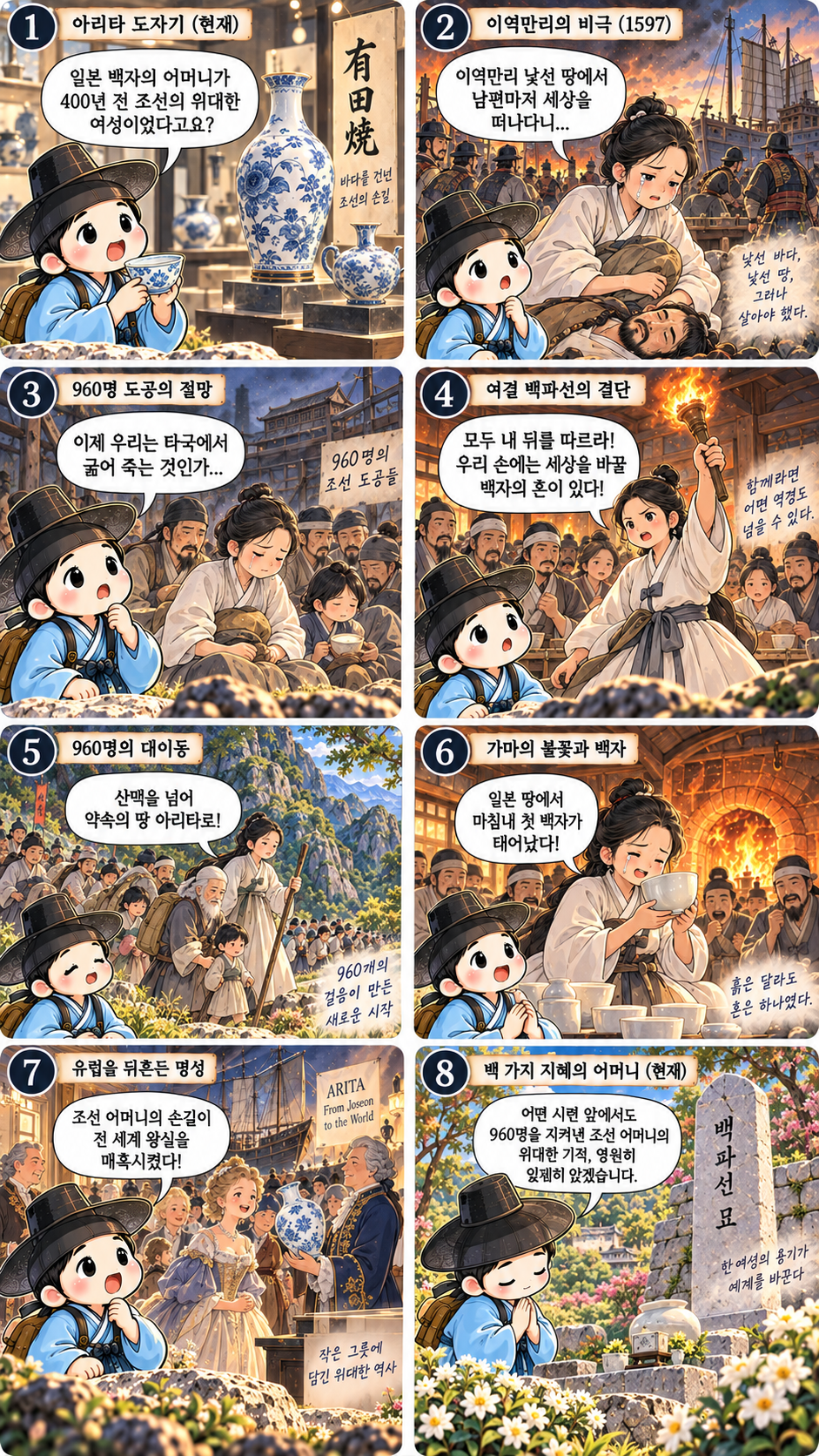
▲ [8컷 만화 릴스] 제6장: 피랍 도공들 (하) — 도공 공동체를 이끈 백자의 어머니, 백파선(百婆仙) (사료와 전승을 바탕으로 한 현대 재현)
5. 다음 스팟으로의 링크 — 바다 건너 도공의 흙에서 지리산 의병의 칼과 붓으로
바다 건너 이국땅에서 도공들이 흙과 불꽃으로 조선의 혼을 지켜내고 있을 때, 본국 남원의 산하에서는 왜군의 잔혹한 학살에 맞서 붓과 칼을 쥐고 피눈물로 전장을 누비던 한 청년 선비가 있었습니다.
남원성 함락 직후 가족과 피난민들을 지리산 험준한 바위 골짜기로 이끌고 의병을 결성하여 게릴라전을 펼치는 한편, 낮에는 적을 베고 밤에는 호롱불 아래서 전쟁의 모든 진실을 《난중잡록(亂中雜錄)》으로 기록한 불굴의 의병장 조경남(趙慶男). 지리산 대간의 거친 바람과 고려 말 이성계 장군의 황산대첩 전설이 살아 숨 쉬는 운명의 고갯길, [제7장: 지리산 대간과 혈로: 조경남의 《난중잡록》과 불우치 전투]로 역사의 발길을 재촉합니다.
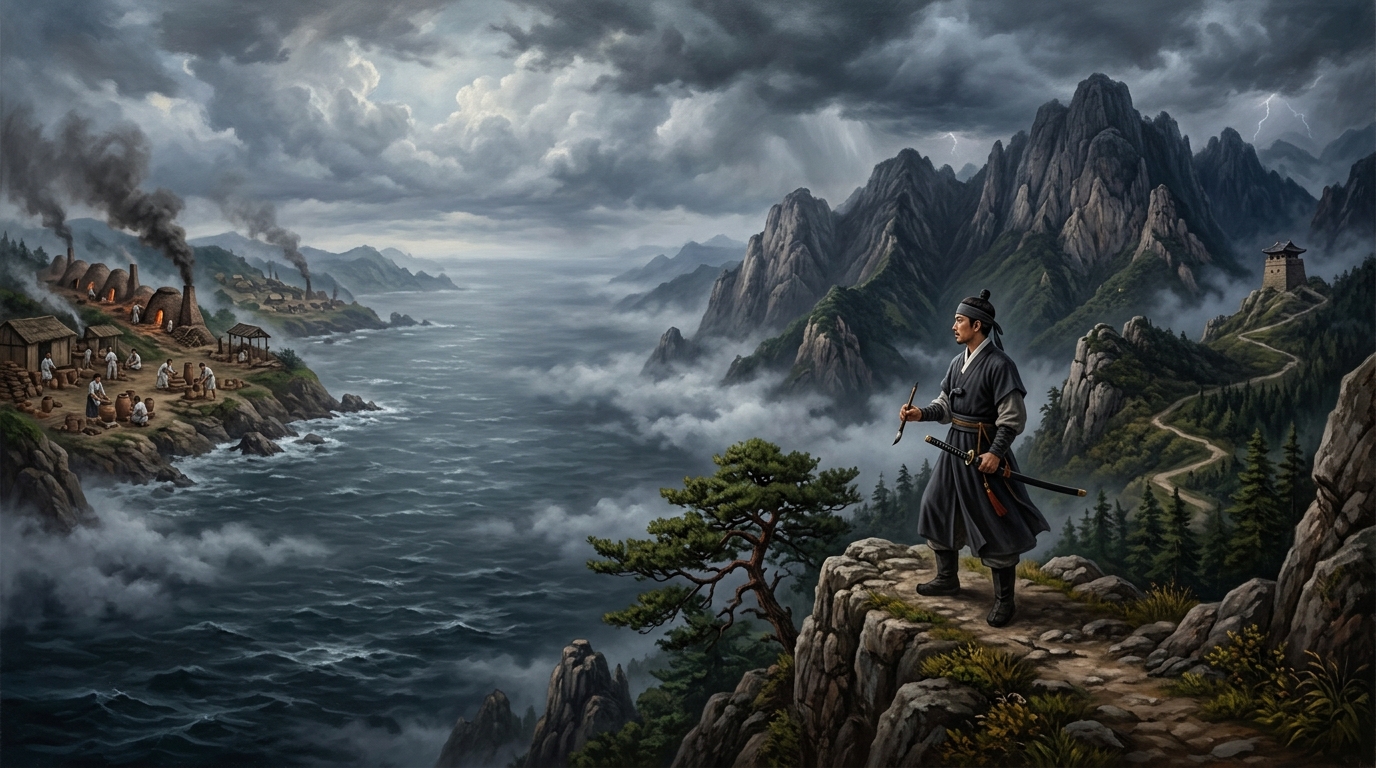
▲ [스팟 연결 서사화] 바다 건너 도공의 흙에서 지리산 의병의 칼과 붓으로 — 현해탄 너머 규슈의 가마터에서 흙과 불꽃으로 문명을 일구어낸 피랍 도공들의 혼과, 조국의 험준한 지리산 능선에서 칼과 붓을 쥐고 왜적에 맞선 의병장 조경남의 불굴의 기개가 하나의 거대한 호국·문화혼으로 이어지는 역사적 연결성을 상징적으로 형상화한 작품입니다.
[Chapter 06] Abducted Namwon Potters (2) — Baek Pa-seon, Mother of White Porcelain
Chapter 6: Abducted Potters (Part 2) — Baek Pa-seon, Matriarch of the Arita Ceramic Community
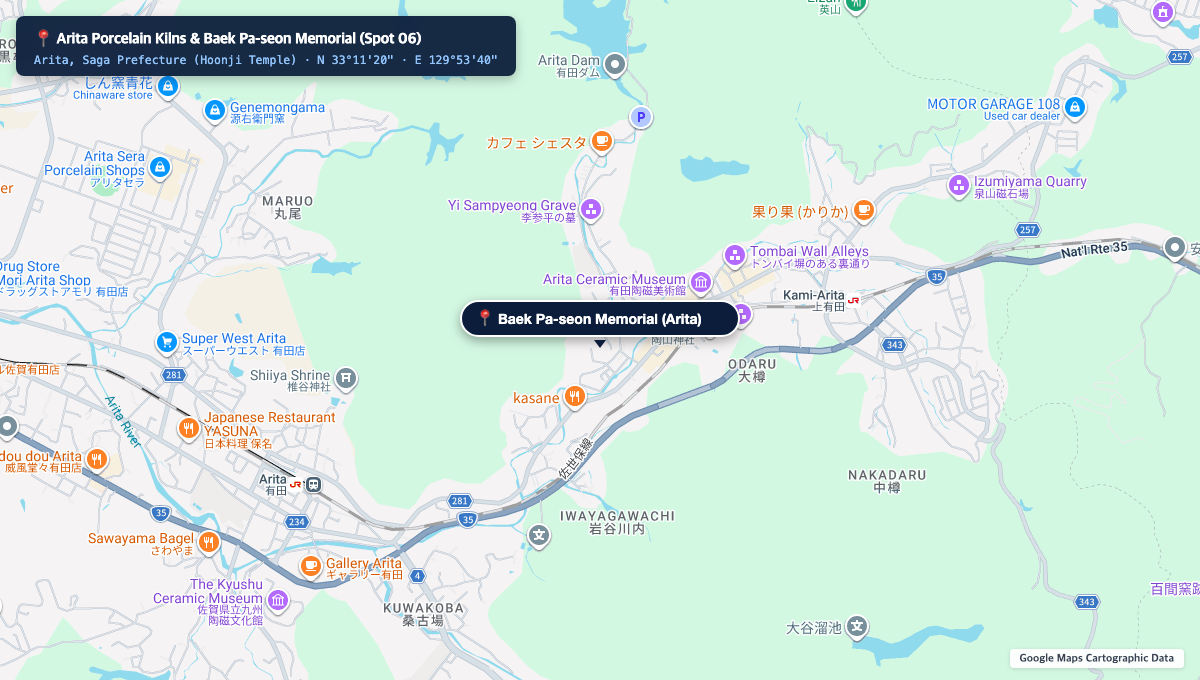
▲ [Field Survey Map] Modern GPS Coordinates of Baek Pa-seon Memorial Stele at Hosenji (Hoon-ji 報恩寺) Temple, Arita, Saga Prefecture
Location: Korean Peninsula (Traditions mention Namwon, Ungcheon, etc.) ➔ Takeo, Saga Prefecture ➔ Hosenji Temple & Tozan Shrine, Arita, Japan (N 33°11'20" · E 129°53'40")
Historical Era: 1590s Wartime Relocation ➔ 1618 Migration to Arita after husband's death ➔ 1656 Passing at Age 96
Key Figures: Baek Pa-seon (Posthumous Buddhist title Manryo Myotai Doba, 1560–1656), Husband (Japanese records: Shintaro / posthumous Buddhist name Tenshitsu Soden; original Korean birth names unrecorded), Ceramic Pioneer Yi Sam-pyeong, Korean Potter Community
1. Spot Map Opening The Joseon Matriarch of the Arita Ceramic Community
Where do we stand? From the kilns of southern Korea across the sea to the quiet grounds of Hosenji (Hoon-ji 報恩寺) Temple in Arita, Saga Prefecture, standing before the historic memorial stele of Baek Pa-seon (百婆仙).
Arita porcelain (Imari ware) stands as Japan's premier ceramic heritage, renowned for dazzling European royal courts via the Dutch East India Company (VOC) during the 17th and 18th centuries. Prior to the late 16th century, Japan lacked the high-temperature kiln and porcelain stone processing techniques required to fire hard-paste white porcelain. Korean master potters brought across the sea played a decisive role in establishing this revolutionary craft.
At the heart of the Arita pottery community stood a remarkable Joseon woman remembered by history as Baek Pa-seon. Following the death of her husband, she held her potter clan and workshop community together, leading them across rugged terrain to Arita, where they helped build the thriving porcelain industry that continues to define the region today.
▲ [Historical Reconstruction Painting] Matriarch Baek Pa-seon Leading the Potter Clan to Arita (Artistic Reconstruction) — Following the passing of her husband (remembered in records as Shintaro / Tenshitsu Soden), Baek Pa-seon unified her potter clan and artisan community, making the historic decision to relocate to Arita where rich porcelain stone deposits had been discovered. She embodied the indomitable spirit and visionary leadership of Joseon womanhood.
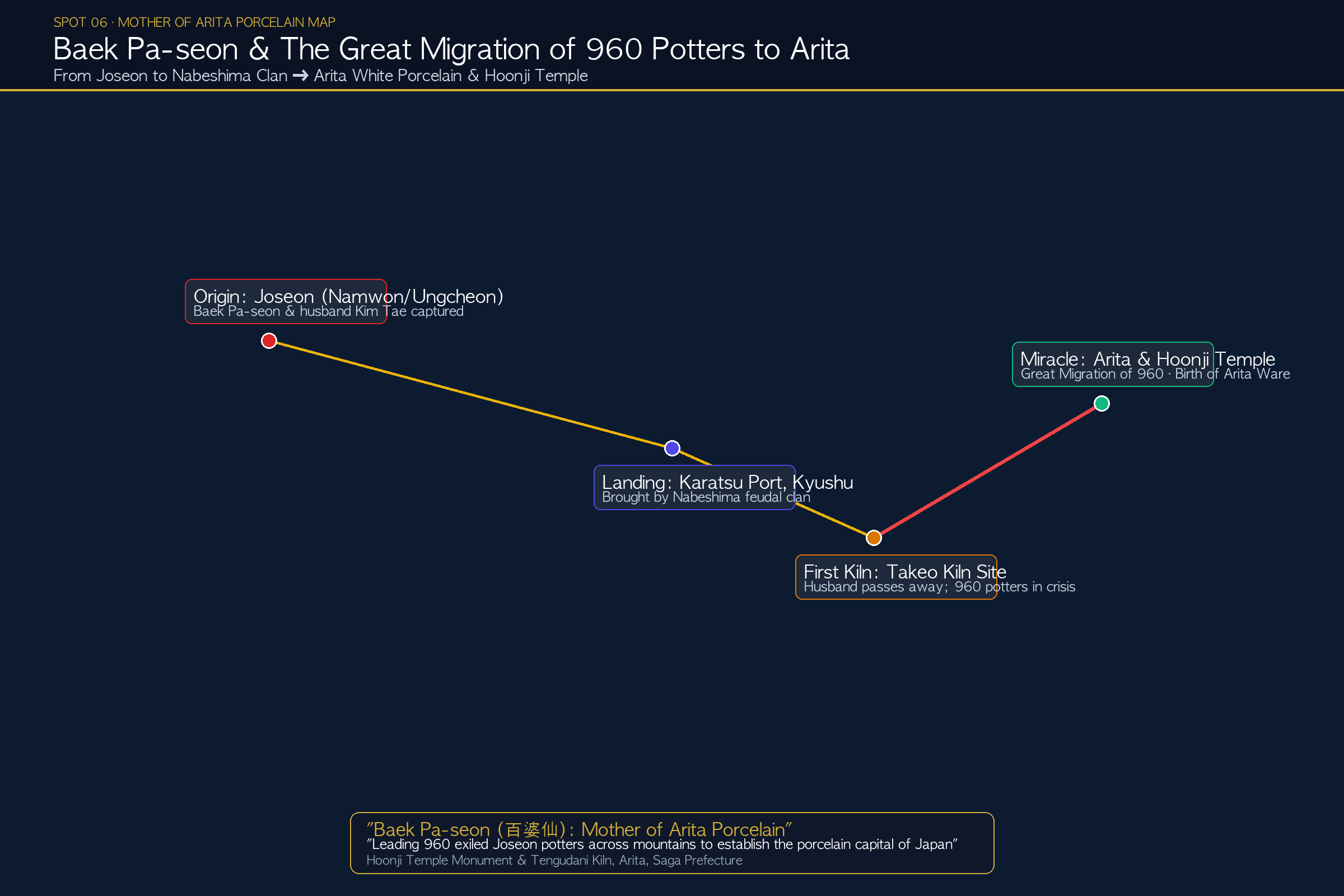
▲ [Spot Location Map] Migration of the Potter Community from Takeo to Arita — Tracing the historic route from the Uchida kiln in Takeo to the Hiekoba district in Arita, undertaken by Baek Pa-seon and her artisan community around 1618 (Reconstructed based on records and traditions).
2. Timeline of Eras and Key Figures A 96-Year Life Dedicated to Craft and Community
The name 'Baek Pa-seon' was not her original birth name; her 1705 memorial stele at Hosenji Temple records her posthumous Buddhist title as Manryo Myotai Doba (萬了妙泰道婆), while 'Baek Pa-seon' (百婆仙) became a revered moniker in later tradition, signifying "the venerable grandmother who lived to nearly a hundred, bestowing virtue and wisdom upon her clan." Living to the advanced age of 96, she nurtured her community and preserved the traditions of Joseon ceramics, standing as an extraordinary example of female leadership in the history of East Asian crafts.
| Historical Phase | Arrival in Japan & Takeo Settlement | Passing of Husband (Tenshitsu Soden) | Migration to Arita (Hiekoba) | Flourishing of Arita Porcelain | Passing at Age 96 & 1705 Memorial Stele |
|---|---|---|---|---|---|
| Era / Year | 1590s Wartime Era | 1618 | Around 1618 | 1620s – 1640s | 1656 (Passing) / 1705 (Stele) |
| Key Event | Potter couple settles at Takeo Uchida kiln | Husband (founder of Fukaumi lineage) passes away | Baek Pa-seon leads potter clan to Arita | Operation of Hiekoba climbing kilns and porcelain trade | Passing at age 96; 1705 memorial stele erected at Hosenji |
| Significance | Transfer of Korean ceramic artisans to northern Kyushu | Potential dispersal of the artisan community | Decisive female leadership preserving communal cohesion | Expansion of Arita ware production for domestic & foreign markets | Posthumous title Manryo Myotai Doba; honored as Baek Pa-seon |
3. Fact-Centered Historical Narrative
1. Arrival in Japan and the Uchida Kiln of Takeo
During the wartime period of the 1590s, forces under Nabeshima commanders and other daimyo took numerous ceramic artisans from southern Korea back to northern Kyushu. Among them were the woman later revered as Baek Pa-seon and her husband (recorded in Japanese sources as Shintaro, with the posthumous Buddhist name Tenshitsu Soden; their original Korean birth names remain unconfirmed in early documents). In Takeo, the potter couple and fellow artisans established the Uchida kiln, firing pottery under domain patronage. However, in 1618, her husband passed away, confronting the artisan community with severe uncertainty.
▲ [Museum Artifact Plate] Authentic Memorial Stele of Baek Pa-seon (Manryo Myotai Doba) at Hosenji (報恩寺) Temple, Arita — Erected in 1705 by her great-grandson Fukaumi Sosen. The inscription records the family's migration from Joseon in the 1590s and honors the matriarch for guiding her clan to Arita following her husband's death, establishing a secure home for their craft.
2. Communal Decision and Migration to Arita
Faced with the loss of their primary master, Baek Pa-seon stepped forward to lead the potter clan. In 1616, fellow Korean master potter Yi Sam-pyeong had identified rich deposits of porcelain stone at Mount Izumiyama in nearby Arita, setting off the development of Japan's first native porcelain industry.
Recognizing the long-term potential of the new ceramic center, Baek Pa-seon led her family and artisan community from Takeo across the mountain pass to the Hiekoba district in Arita around 1618. Her decisive leadership prevented the dispersal of the workshop and established a secure foundation for their craft.
▲ [Museum Artifact Plate] Historical Temple Tablet Commemorating the Husband of Baek Pa-seon (Tenshitsu Soden) — Recording the legacy of the pioneer artisan who established the Uchida kiln in Takeo and founded the Fukaumi family. While later local theories suggested Korean names like Shim Yeon, initial primary records do not confirm an original Korean personal name.
3. Izumiyama Kaolin Stone and the Expansion of Arita Ware
In Arita, Baek Pa-seon's clan operated climbing kilns (noborigama) at Hiekoba, utilizing the refined porcelain stone from Izumiyama. While Yi Sam-pyeong is historically venerated as the Tosō (Ceramic Father) for firing early porcelain at Tengudani, Baek Pa-seon served as the vital organizational pillar and maternal leader (Jongmo, 宗母), managing workshops and sustaining community welfare.
▲ [Museum Artifact Plate] Historic Izumiyama Ceramic Stone Quarry in Arita (Japan National Historic Site) — The landmark mountain of porcelain stone discovered by Joseon potters that enabled high-temperature porcelain firing in Japan.
Under Baek Pa-seon's guidance, the Fukaumi workshops flourished, producing fine white porcelain and blue-and-white wares that contributed significantly to the growing reputation of Arita ceramics.
▲ [Museum Artifact Plate] Official Historical Marker at Hosenji Temple — Preserving the local history of Arita, recording Baek Pa-seon's role in leading her potter community to Hiekoba and fostering the growth of the local ceramic heritage.
4. International Trade and Baek Pa-seon's Enduring Legacy
During the mid-17th century, political upheavals in China disrupted Jingdezhen porcelain exports, prompting the Dutch East India Company to procure large quantities of Arita porcelain for European markets. Arita ware quickly gained worldwide fame for its refined cobalt blue and polychrome enamel designs.
The contribution of Korean potters was commemorated throughout the region. At Tozan Shrine (陶山神社) in Arita, local potters later erected a monumental torii gate made entirely of blue-and-white porcelain, honoring the pioneer artisans who established the craft.
▲ [Museum Artifact Plate] Porcelain Torii Gate at Tozan Shrine (陶山神社) in Arita — Crafted from blue-and-white porcelain (Japan Registered Tangible Cultural Property), standing as a monument to the foundational contributions of Korean ceramic artisans in Arita.
On March 10, 1656, the matriarch passed away at the age of 96. In 1705, her great-grandson Fukaumi Sosen erected the commemorative stele at Hosenji Temple, inscribing her posthumous title Manryo Myotai Doba, while later generations revered her as 'Baek Pa-seon' in celebration of her long life of wisdom and benevolence.
▲ [Museum Artifact Plate] Excavated Early 17th-Century Blue-and-White Arita Porcelain Shards — Early Arita ceramic specimens reflecting the technical lineage and aesthetic elegance inherited from Joseon white porcelain.
4. 8-Panel Comic Storytelling Narrative — Baek Pa-seon, Matriarch of the Potters
Frame-by-Frame Narrative Guide (Frames 1–8)
This 8-panel graphic narrative depicts the moving life of Baek Pa-seon, who guided her artisan community through foreign adversity to establish a thriving ceramic center in Arita.
- Hardship of Abduction and the Takeo Kilns (Panels 1–3): Relocated to Japan during the 1590s, Baek Pa-seon and her husband establish a pottery kiln at Takeo in Kyushu. When her husband passes away in 1618, the artisan community faces a critical crossroads.
- A Matriarch's Resolve and Migration to Arita (Panels 4–6): Overcoming grief, Baek Pa-seon rallies the artisan clan. Deciding to relocate to Arita where rich porcelain stone had been found, she leads her community across mountain trails to establish kilns at Hiekoba.
- Flourishing Wares and Eternal Memory (Panels 7–8): The kilns flourish, firing elegant porcelain that travels across the globe. Living to the age of 96 as a revered matriarch, she is honored with the 1705 stele at Hosenji Temple, preserving the enduring legacy of Korean ceramic masters in Japan.
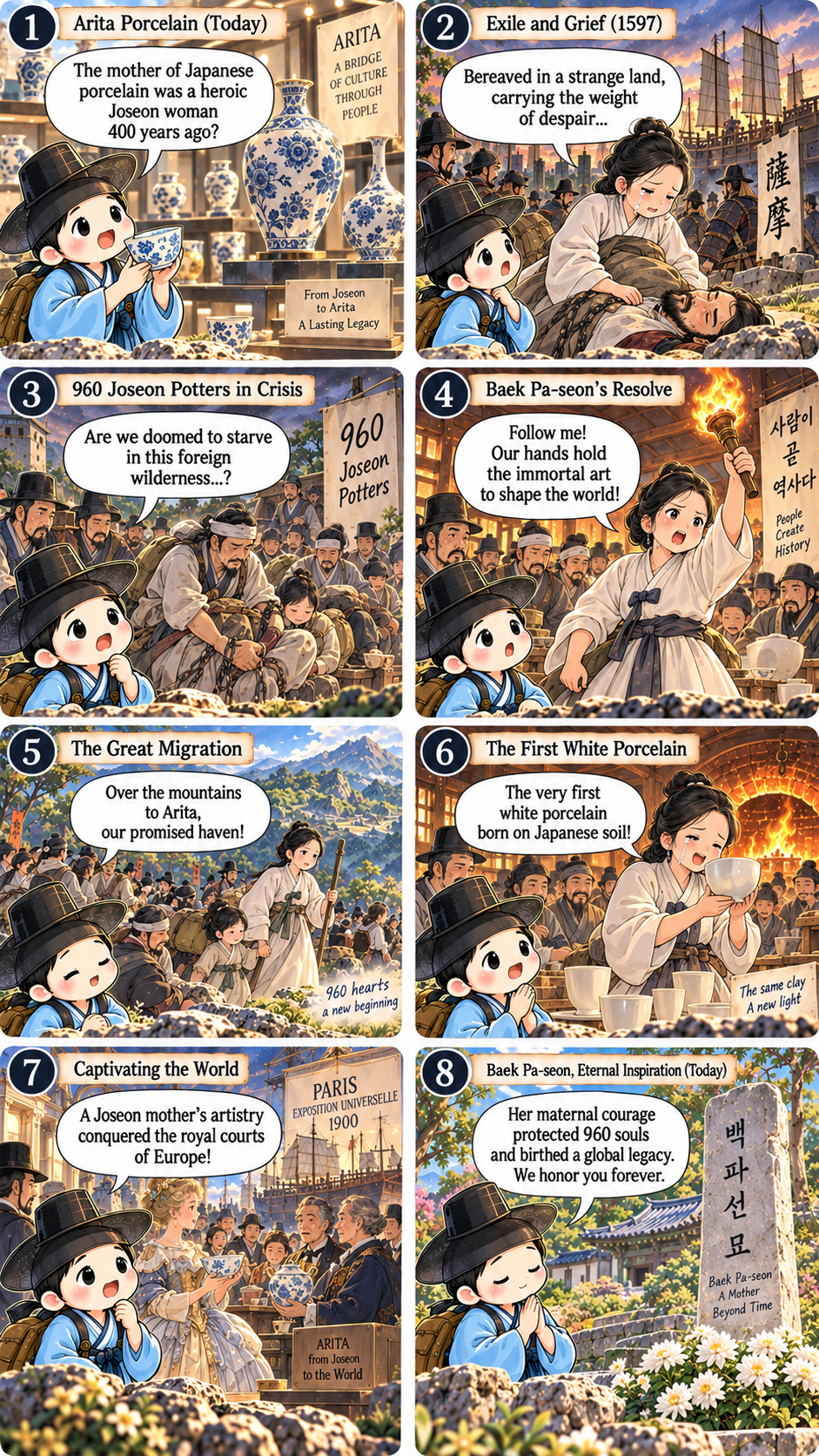
▲ [8-Panel Comic Reel] Chapter 6: Abducted Potters (Part 2) — Baek Pa-seon (Artistic reconstruction based on historical records and traditions)
5. Link to the Next Spot — From Kiln Fires to Righteous Swords in Jirisan
While Korean potters preserved their cultural heritage through clay and fire across the sea, scholars and volunteers in the homeland took up arms to defend their communities in the rugged ridges of Mount Jirisan.
Following the fall of Namwon Fortress, scholar-commander Jo Gyeong-nam led volunteer militia units from mountain refuges while compiling an invaluable historical chronicle of the war, Nanjung Japrok (亂中雜錄). We turn from foreign kilns back to the mountain ridges of home in [Chapter 7: Jirisan Ridge and Yeowonchi — Jo Gyeong-nam's Nanjung Japrok and Guerrilla Resistance].
▲ [Narrative Bridge Illustration] From Kiln Fires Across the Sea to Righteous Swords in Mount Jirisan — A symbolic artistic bridge connecting two parallel legacies: the exiled potters across the Korea Strait crafting timeless civilization through clay and fire in Kyushu, and scholar-commander Cho Gyeong-nam standing vigilant upon the crags of Mount Jirisan with brush and sword to defend and record the fate of his nation.


