[제9장] 노령을 넘는 칼바람과 서해안의 수난 — 10,040개의 잘려나간 코와 포로의 바다
제9장: 노령의 칼바람과 서해안의 수난 — 10,040개의 코와 포로의 바다
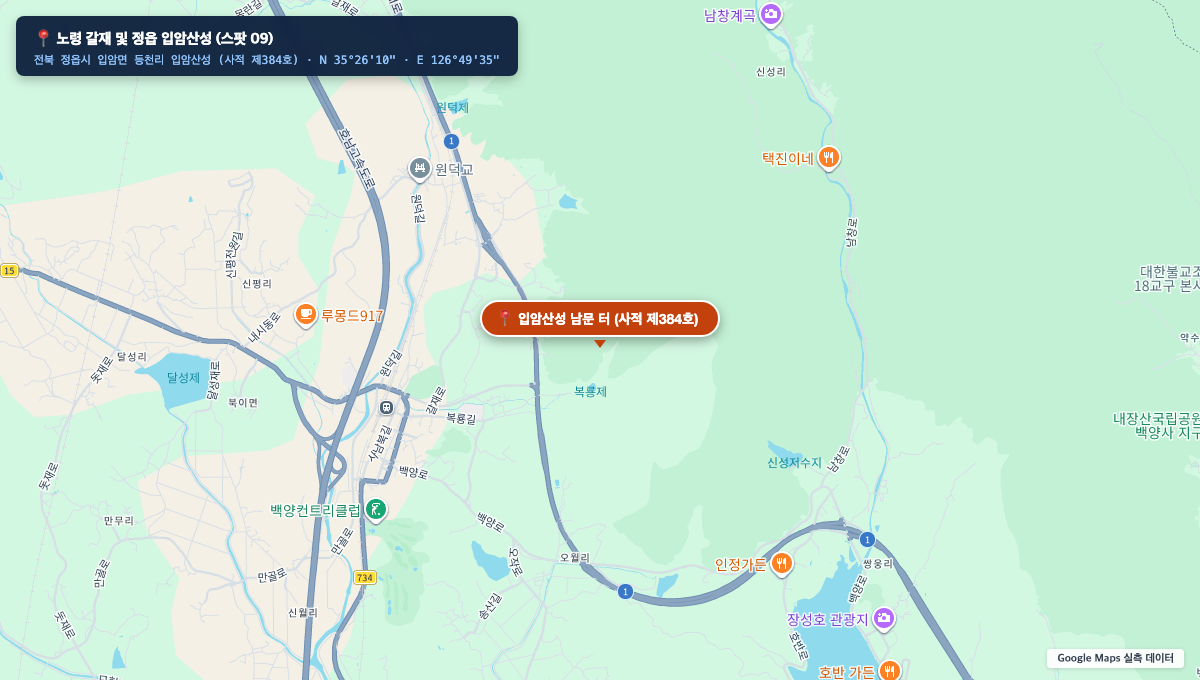
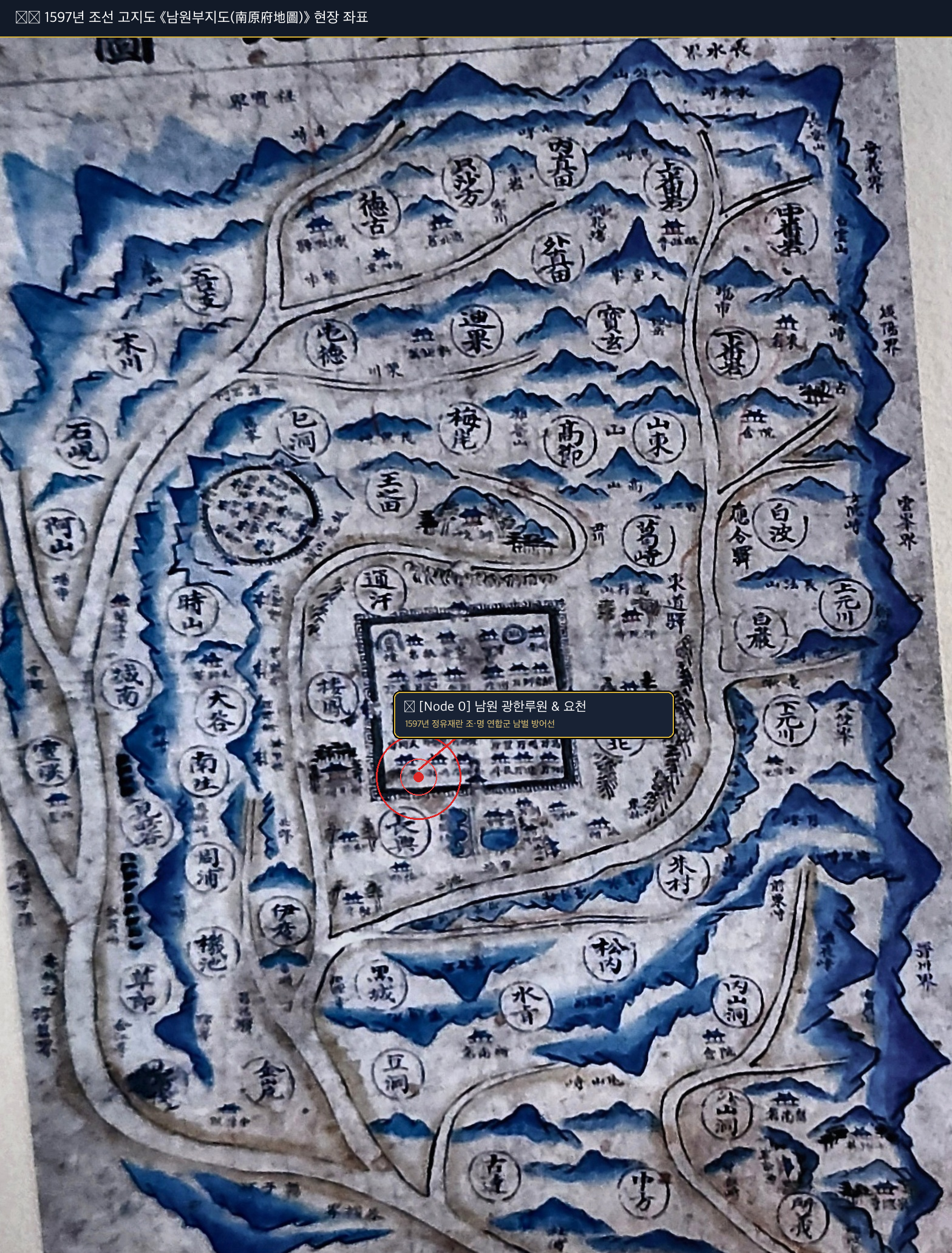
▲ [현장 실측 지도] 전남 장성 노령 갈재 및 입암산성(사적 제384호) 현대 좌표 (Google Maps 기반 참고도)
위치: 전북 정읍시 ~ 전남 장성군 북하면 입암산성(사적 제384호) 및 영광 법성포, 함평만 일원 (N 35°26'10" · E 126°51'20")
시대 배경: 1597년 음력 9월 ~ 10월 늦가을
주요 인물: 장성현감 입암산성 수성장 윤진(尹軫, 1558~1597), 서해안 피랍 백성들, 왜군 군감들, 루이스 프로이스(Luís Fróis), 안토니오 코레아(Antonio Corea)
1. 스팟 맵 오프닝 10,040개의 코가 베이고 수만이 쇠사슬에 묶인 통한의 땅
우리는 지금 어디에 서 있는가? 전북 정읍과 전남 장성의 경계를 가르는 험준한 갈재(노령 蘆嶺) 정상의 입암산성(笠巖山城) 남문 터와, 영광 법성포(法聖浦) 및 함평만으로 이어지는 호남 서해안 포구 길목에 서 있습니다.
1597년 가을, 남원을 유린한 왜군은 전라도를 완전히 초토화하고 조선인의 씨를 말리라는 도요토미 히데요시의 잔혹한 명령에 따라 호남 전역으로 흩어졌습니다. 그들은 단순한 점령군이 아니라 인간 사냥꾼이었습니다. 전북과 전남을 잇는 유일한 산악 통로인 노령 갈재를 틀어막고 피난민들을 지키려던 장성현감 윤진(尹軫) 장군은 고립무원의 산성에서 결사항전 끝에 장렬히 전사했습니다.
산성이 무너지자 왜군은 무저항의 양민, 여성, 어린아이들까지 무차별 살상하고 얼굴에서 코를 베어내어 소금에 절였습니다. 왜군 가신들이 작성한 공식 영수증에 적힌 코의 숫자만 해도 무려 '10,040개'에 달했습니다. 그리고 살아남은 수많은 백성은 서해안 포구로 끌려가 일본 규슈로 강제 연행되었으며, 그중 일부는 나가사키 등지에서 포르투갈 상선 등에 의해 해외로 팔려나가는 비극을 겪었습니다. 400여 년이 지난 오늘날에도 서해안의 바람은 그날의 처절한 아픔을 묵묵히 전하고 있습니다.
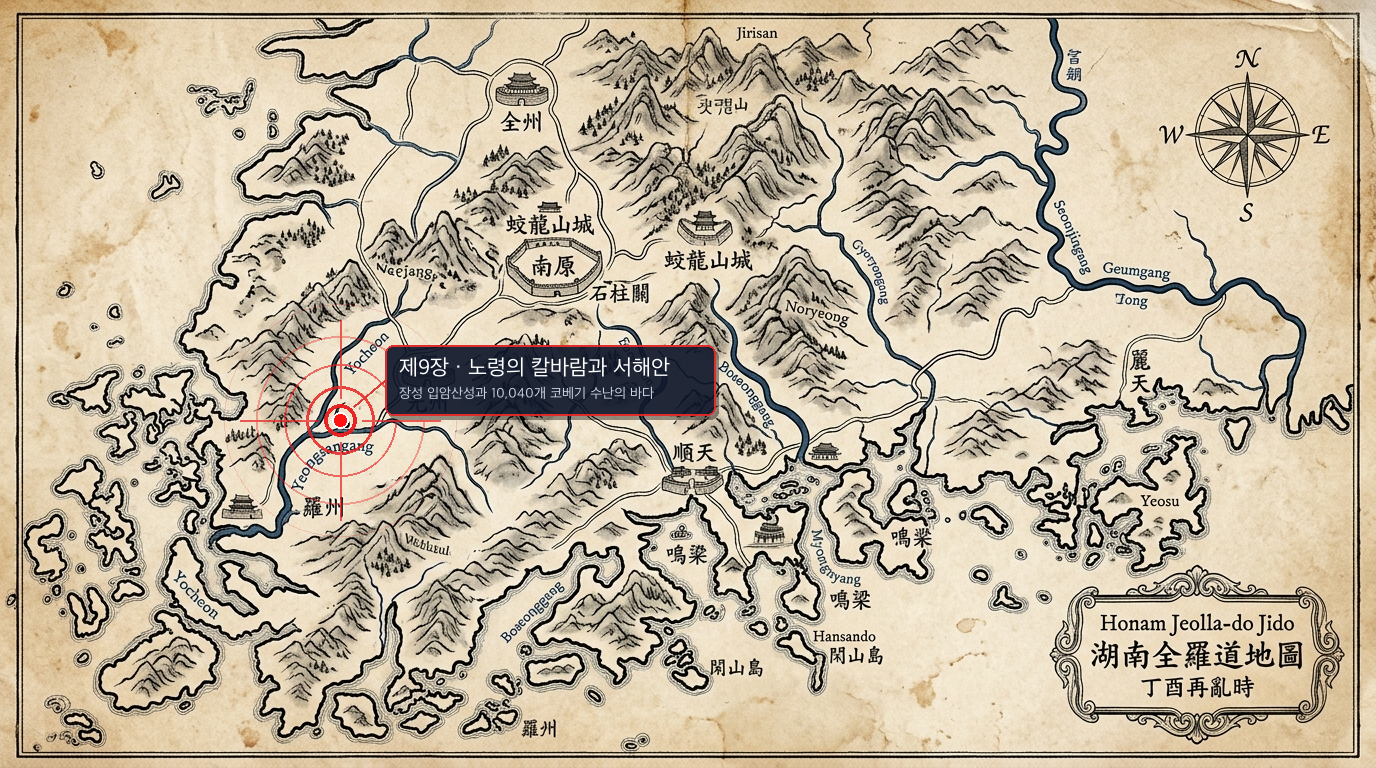
▲ [스팟 위치지도] 장성 노령 입암산성 및 서해안 포로 압송로 지형도 — 호남의 관문 갈재를 방어하던 입암산성 요새와, 왜군이 호남 각지에서 민간인을 사로잡아 서해안 포구를 거쳐 일본으로 끌고 갔던 비극의 해상 압송로를 실측 고증한 지도입니다.
2. 시간과 인물의 타임라인 국가가 자행한 전쟁 범죄와 세계로 흩어진 디아스포라
정유재란기 왜군이 자행한 코베기 만행과 포로 인신매매는 16세기 동아시아는 물론 세계 전쟁사에서도 유례를 찾기 힘든 잔혹한 국가 주도 전쟁 범죄였습니다.
| 역사적 단계 | 도요토미의 코베기 명령 하달 | 노령 갈재 입암산성 윤진의 결사항전 | 호남 초토화와 10,040개 코 접수 | 서해안 포구 집결과 나가사키 압송 | 포르투갈 상선 매매와 안토니오 코레아 |
|---|---|---|---|---|---|
| 연대 / 시기 | 1597년 음력 7~8월 | 1597년 음력 9월 초순 | 1597년 음력 9월 28일 | 1597년 10월 ~ 1598년 | 1598년 ~ 1600년대 초 |
| 핵심 사건 | 수급 대신 '조선인의 코' 베어 바치라 지시 | 장성현감 윤진, 산성 수비 중 장렬히 전사 | 왜군 군감, 비청취상(鼻請取狀) 공식 발행 | 법성포·함평만 등에서 포로 결박 출항 | 나가사키서 유럽 상선 매매 및 피렌체 이동 |
| 역사적 의의 | 군인이 아닌 민간인 무차별 학살 공인 | 호남 서북부 피난민 대피를 위한 결사항전 | 국가 권력이 자행한 전쟁 범죄의 실증 사료 | 수만 명 조선 백성의 강제 연행 디아스포라 | 유럽 기록과 루벤스 드로잉 관련 학설 등 세계사적 관심 |
3. 팩트 중심의 역사적 스토리 전개
1. 노령 갈재의 방파제, 윤진 장군과 입암산성의 결사항전
남원을 함락시킨 왜군은 호남의 곡창지대인 나주와 영암, 장성으로 진격했습니다. 전북 정읍과 전남 장성을 가르는 노령(蘆嶺) 고갯길의 험준한 바위산 위에 축조된 입암산성(사적 제384호)에서, 장성현감 윤진(尹軫)은 관민과 피난민 수천 명을 성안으로 대피시키고 왜군의 선봉대를 맞았습니다.
가파른 협곡과 거대한 바위 절벽을 방패 삼아 농성했으나, 배후로 침투한 왜군의 기습과 조총 집중 사격 앞에 성벽이 무너졌습니다. 윤진 장군은 칼을 휘두르며 백병전을 벌이다 활과 총탄에 맞아 장렬히 전사했습니다. 비록 산성은 함락되었으나, 윤진 장군의 필사적인 항전 덕분에 수천 명의 백성이 지리산과 변산반도 깊은 산속으로 몸을 피할 수 있었습니다.
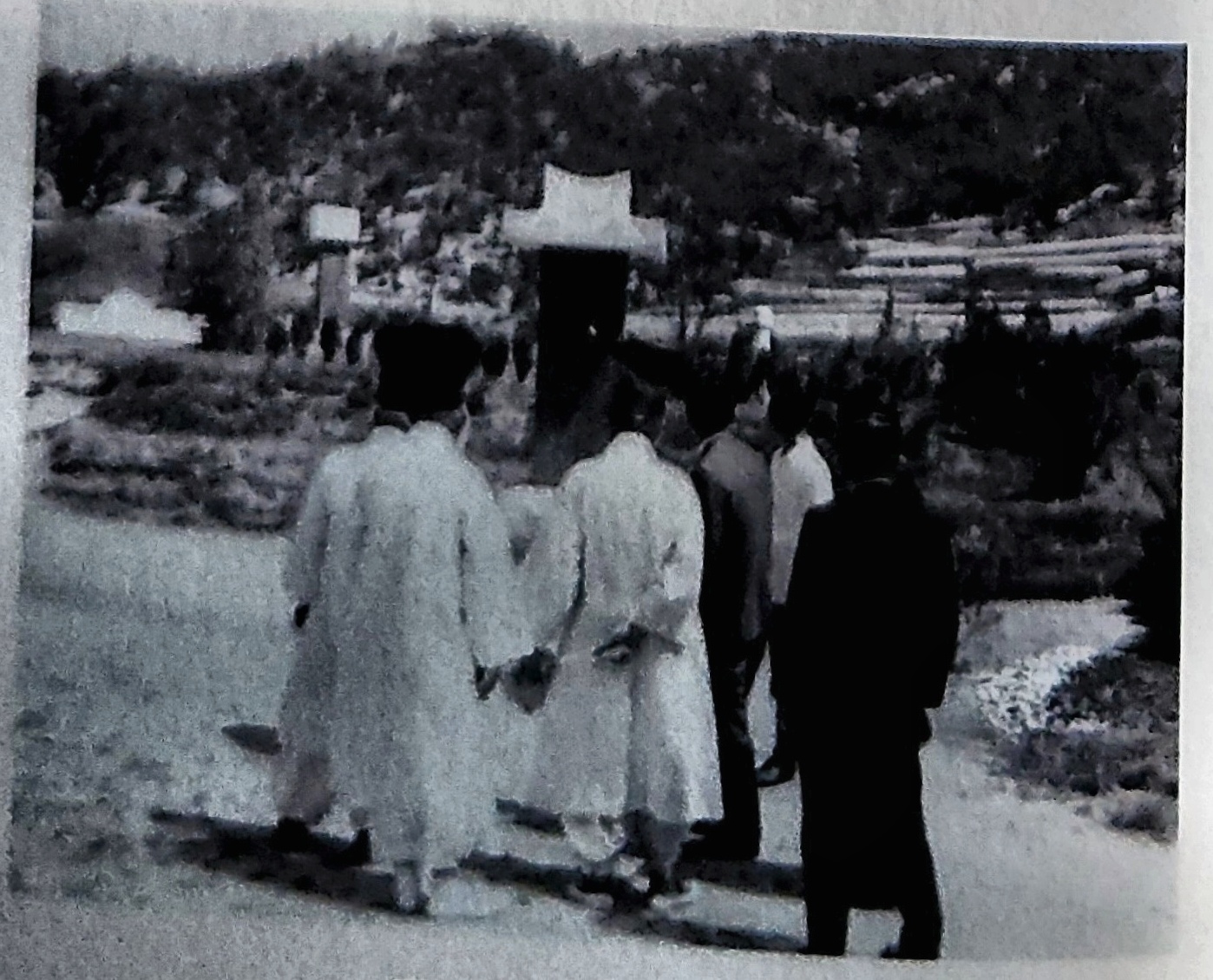
▲ [현장 유적 도판] 호남의 관문 갈재(노령)를 틀어막고 백성들을 대피시키며 결사항전한 장성 입암산성 남문 석벽 (사적 제384호) — 해발 654m 입암산 정상부 협곡에 화강암을 견고하게 쌓아 올린 산악 요새. 윤진 장군과 관민들이 파죽지세로 북상하는 왜군을 저지하기 위해 마지막 피 한 방울까지 쏟아부었던 결사항전의 성벽입니다.
2. '코 10,040개 접수' — 종군승 게이넨의 증언과 국가 범죄 영수증
입암산성을 돌파한 왜군은 호남 각지에서 광란의 살육을 자행했습니다. 임진왜란 초기 머리(수급)를 베어가던 왜군은, 무게와 부피 때문에 운반이 어렵다는 이유로 1597년 정유재란부터 "조선인의 코를 베어 소금에 절여 보내라"는 도요토미 히데요시의 잔혹한 군령을 받았습니다.
당시 왜군 군의관 겸 종군 승려로 참전했던 게이넨(慶念)은 자신의 일기 《조선일일기(朝鮮日日記)》에 침략자의 내부 시선으로 전율할 만한 전쟁 범죄의 현장을 기록했습니다.
"아이들은 줄로 묶고 부모는 쳐 죽여 갈라놓으니, 그 울부짖는 소리가 지옥의 옥졸이 죄인을 다루는 형벌과 같다."
"성 안의 남녀를 남김없이 죽여 생포한 자가 한 명도 없다. 길바닥에 죽은 자들이 모래알처럼 널려 있어 차마 눈 뜨고 볼 수 없다."
— 왜군 종군승 게이넨, 《조선일일기(朝鮮日日記)》 (1597년 정유년 8월)
왜군 군감들은 소금에 절인 조선인의 코를 가마니에 담아 하나하나 검수하고, 마치 군수품을 수령하듯 공식 영수증인 《비청취상(鼻請取狀)》을 발행했습니다. 1597년 음력 9월 28일, 왜군 장수 요시미 히로유키의 부하들이 바친 코만 해도 무려 '10,040개'였습니다. 부녀자, 어린아이, 갓난아기까지 가리지 않고 베어낸 이 코들은 오사카를 거쳐 교토 도요토미 신사 앞 '이총(耳塚·귀무덤)'에 거대한 흙더미로 묻혔습니다.
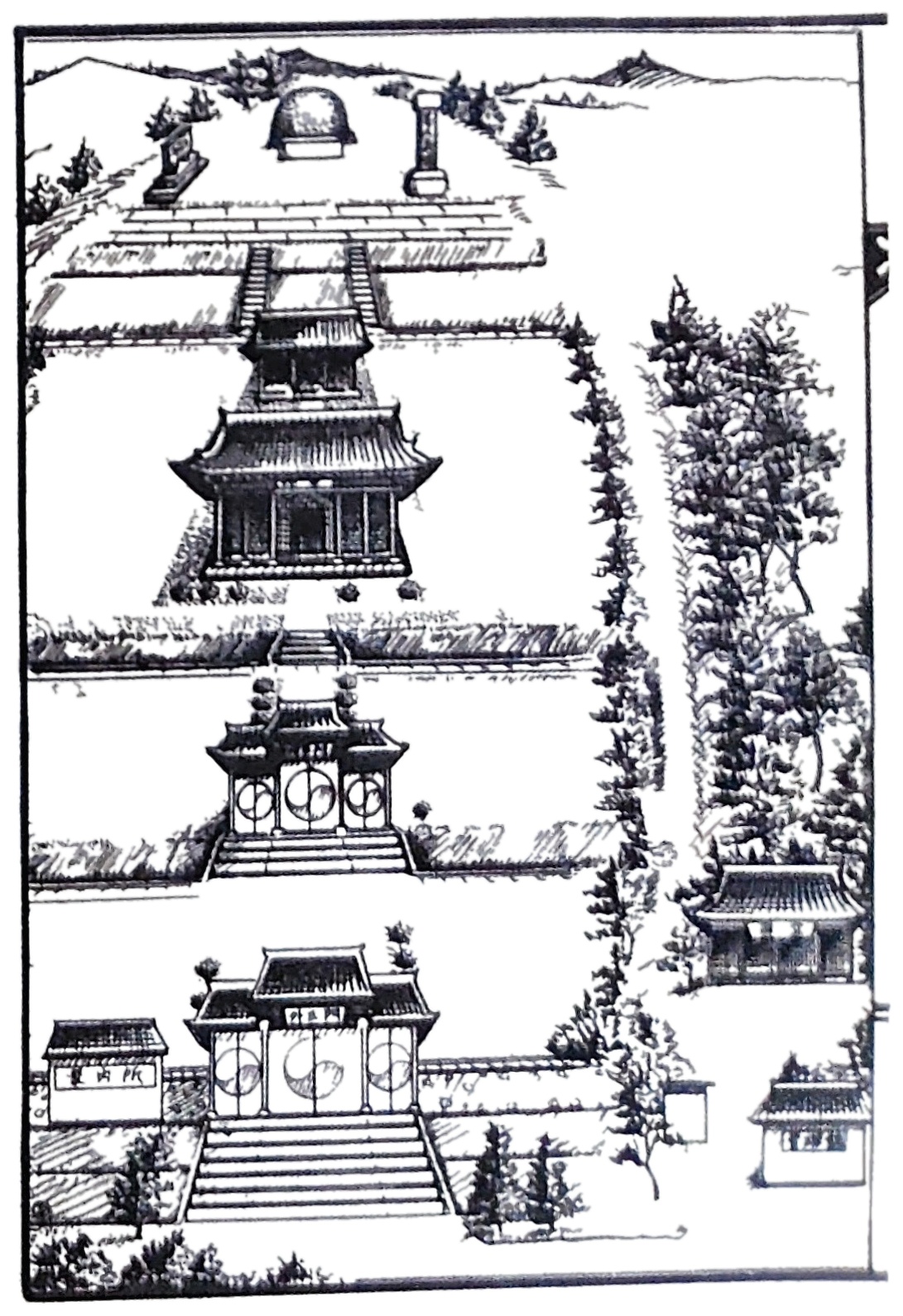
▲ [고문서 사료 도판] 1597년 왜군 가신들이 소금에 절인 조선인 코 10,040개를 접수하고 작성한 문서 (일본 도쿄대학 사료편찬소 소장) — 호남 각지에서 민간인을 무차별 학살하고 베어낸 코 10,040개를 접수했다는 왜군 공식 영수증. 침략자들의 살육이 전공 경쟁을 위한 잔혹한 전시 범죄였음을 적나라하게 보여주는 사료입니다.
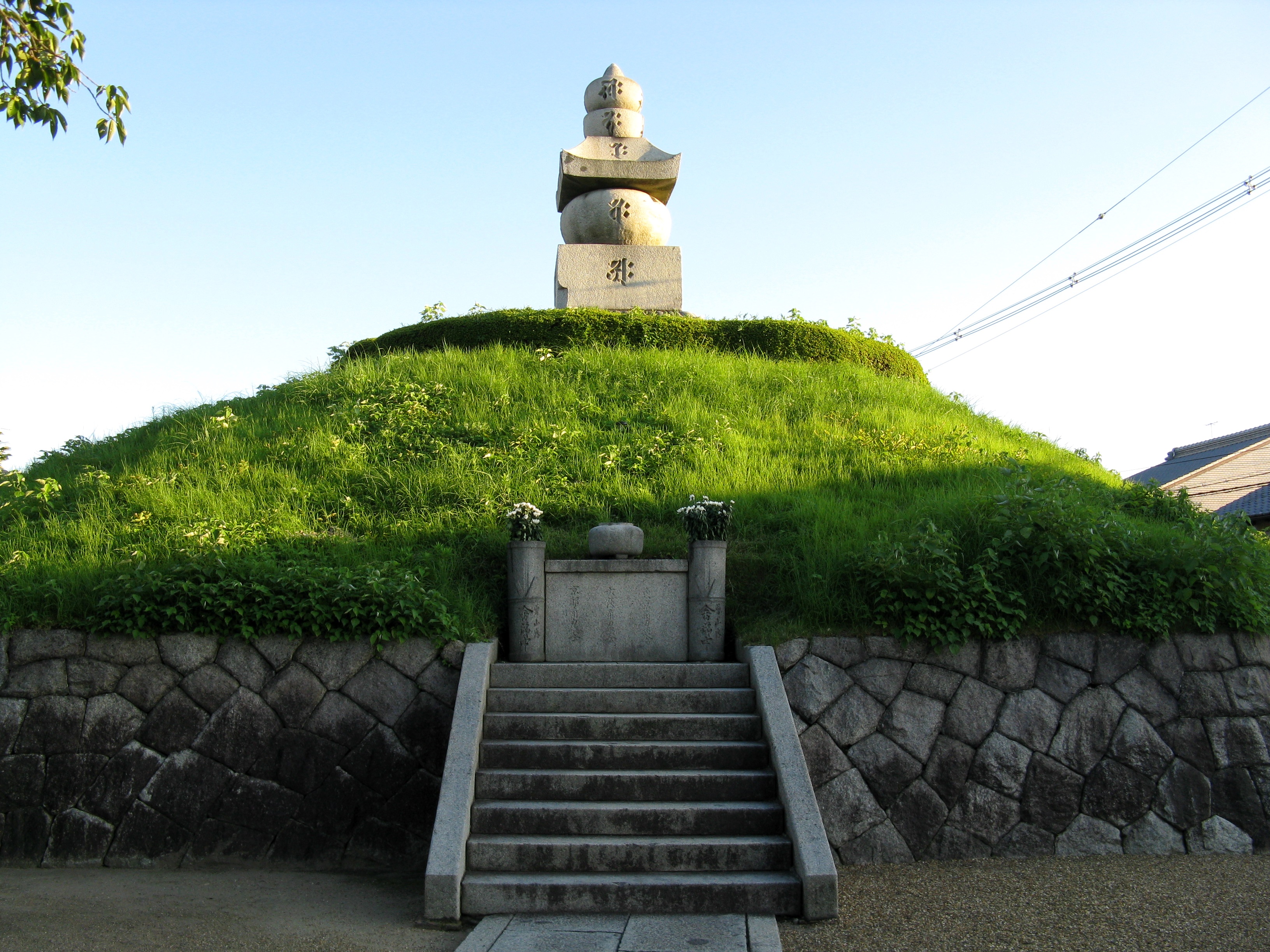
▲ [현장 유적 도판] 일본 교토 귀무덤(이총·耳塚) 전경 — 정유재란 당시 호남과 삼남 지방에서 베어간 수많은 조선인의 코와 귀를 소금에 절여 가져와 도요토미 히데요시 신사 맞은편에 묻고 그 위에 오륜석탑을 올린 현장(일본 교토시 히가시야마구 현지 실사).
3. 서해안 포구의 통곡과 나가사키 노예선의 비극
코를 베이지 않고 살아남은 백성들의 운명도 가혹했습니다. 왜군은 남녀와 장인들을 결박하여 영광 법성포와 함평만 등 서해안 포구를 통해 일본 본토로 압송했습니다. 당시 규슈 나가사키 등지에는 일본 상인뿐 아니라 포르투갈 무역선들이 기항하고 있었습니다.
당시 일본에 주재하던 포르투갈 예수회 선교사 루이스 프로이스(Luís Fróis)는 저서 《일본사(Historia de Japam)》에서 왜군에 의해 끌려온 수많은 조선인이 헐값에 매매되던 참상을 기록했습니다. 이탈리아 피렌체 상인 프란체스코 카를레티(Francesco Carletti) 역시 나가사키에서 조선인 포로들을 사들여 그중 '안토니오 코레아(Antonio Corea)'를 유럽 피렌체까지 데려갔음을 여행기(《동서인도 여행기》)에 남겼습니다.
한편, 17세기 유럽에 조선인이 유입된 사례와 관련하여, 플랑드르 거장 페테르 파울 루벤스(Peter Paul Rubens)에게 귀속되는 이른바 《한국 복식을 한 남자(Man in Korean Costume)》(게티 미술관 소장) 드로잉도 오랫동안 주목을 받아왔습니다. 게티 미술관은 복식의 조선 관련성을 논의하지만 모델의 신원을 확정하지는 않고 있으며, 이 인물을 안토니오 코레아와 직접 동일시하는 견해는 확정된 사실이 아닌 가설의 영역에 남아 있습니다.
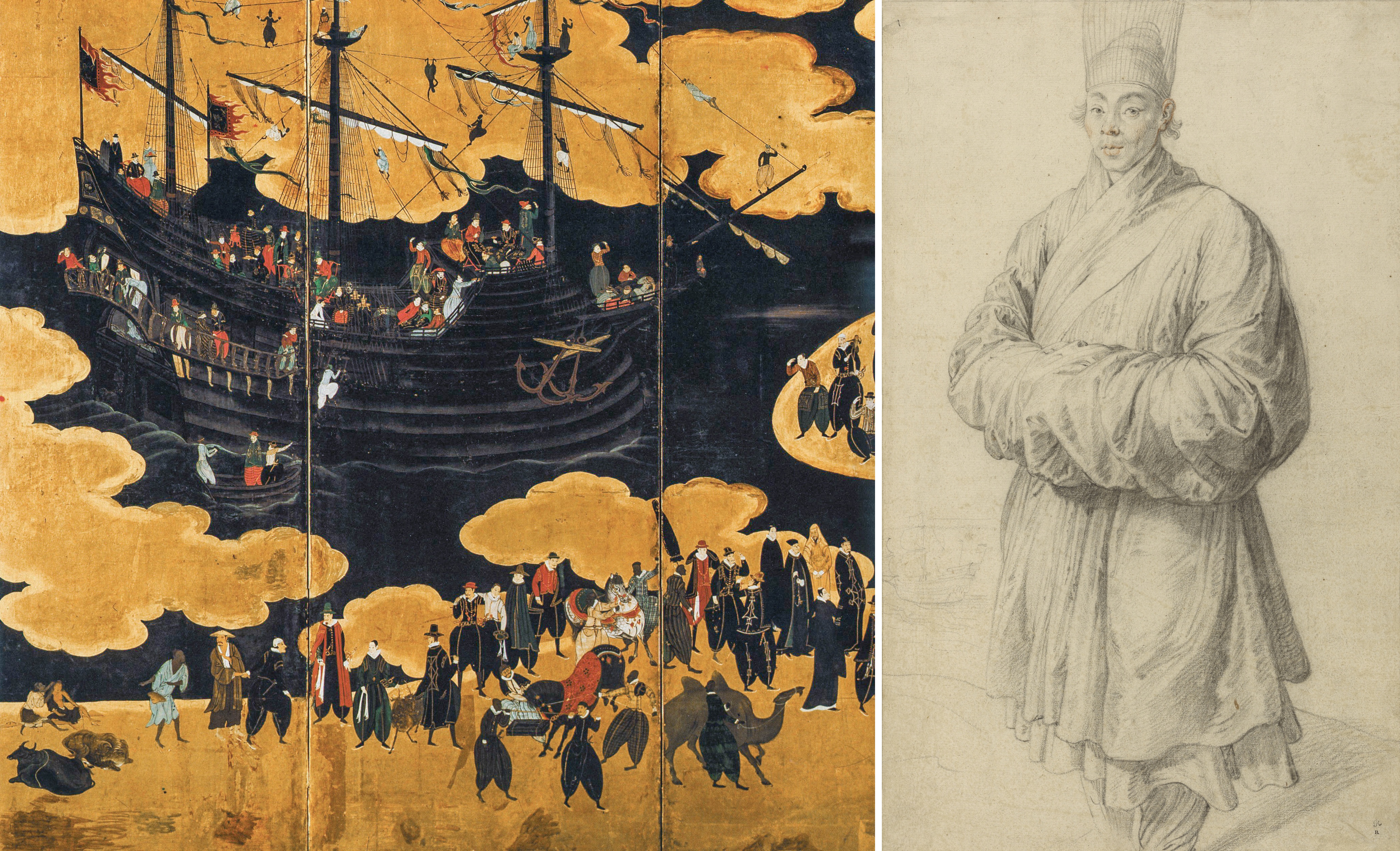
▲ [박물관 소장 회화 자료] 서해안 포구를 거쳐 일본으로 압송된 포로들과 유럽으로 이어진 디아스포라 관련 시각 자료 — 16세기 카노 나이젠의 《남만무역도 병풍》(포르투갈 무역선)과 루벤스의 드로잉 《한국 복식을 한 남자》(게티 미술관 소장)를 병치한 도판. 서해안 포구에서 시작된 조선인 포로들의 비극적인 유입과, 이후 유럽 예술계의 관심 및 학술적 논의를 함께 보여줍니다.
4. 스토리텔링 8컷 만화 릴스 — 10,040개의 코와 포로의 바다
본 8컷 역사 만화는 노령 갈재의 방파제 입암산성을 지키다 순절한 윤진 장군의 의로운 죽음부터, 도요토미 히데요시가 자행한 잔혹한 코베기 만행, 그리고 서해안 포구를 거쳐 이국땅으로 끌려가야 했던 조선 백성들의 거대한 비극을 고발합니다.
- 노령 갈재의 격전과 장렬한 산화 (1~3컷): 전북과 전남을 가르는 험준한 갈재 입암산성 남문에서, 몰려드는 왜군 대군을 막아서며 "단 한 명의 백성도 내어줄 수 없다!"고 외치는 장성현감 윤진 장군의 모습으로 시작합니다. 빗발치는 조총 탄환 속에서 성벽을 지키다 산화하지만, 그 희생 덕분에 수많은 백성이 산속으로 피신합니다.
- 광기 어린 코베기와 섬뜩한 영수증 (4~6컷): 산성을 돌파한 왜군들이 마을을 덮쳐 무저항의 백성들을 학살하고 얼굴에서 코를 베어내는 아비규환의 참상이 펼쳐집니다. 왜군 군감들이 소금에 절인 코를 가마니에 담아 검수하고 '10,040개 접수'라는 직인을 찍어 비청취상을 발급하는 장면은 국가 권력이 자행한 전쟁 범죄의 극치를 보여줍니다.
- 포로선과 영원한 통곡 (7~8컷): 영광 법성포와 함평만 포구에서 백성들이 결박되어 배에 실려 일본으로 압송됩니다. 망망대해로 멀어지는 배 난간을 붙잡고 조국 산하를 바라보는 백성들의 슬픔. 400여 년이 흐른 오늘날 교토 귀무덤에 서린 원혼과 서해안의 바람은 침략 전쟁의 야만성을 인류에게 영원히 경고합니다.
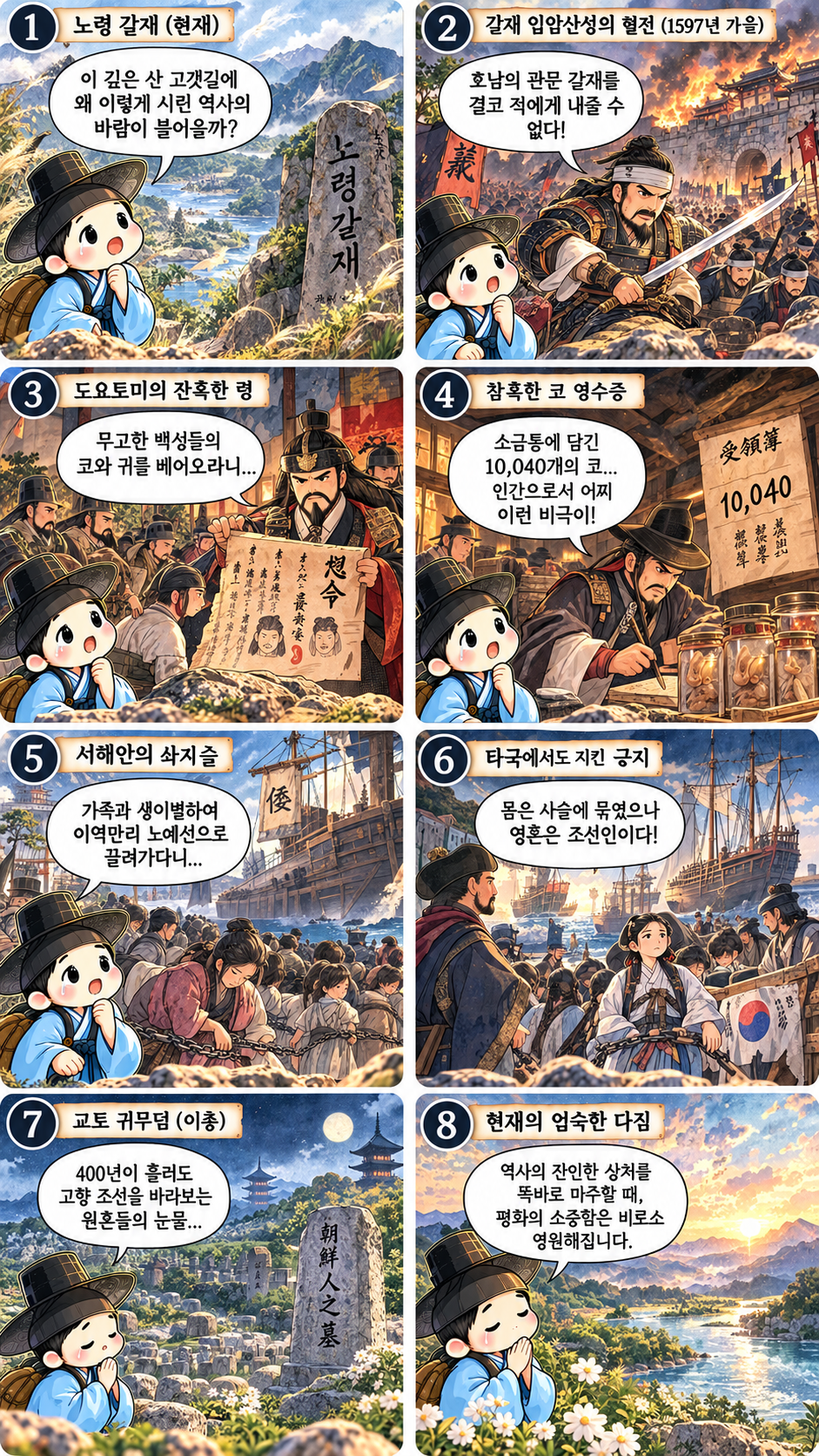
▲ [8컷 만화 릴스] 제9장: 노령의 칼바람과 서해안의 수난 — 10,040개의 코와 포로의 바다
5. 다음 스팟으로의 링크 — 학살과 피랍의 바다에서 역사를 지켜낸 산속으로
육지가 불타고 바다에서는 백성들이 쇠사슬에 묶여 끌려가는 절체절명의 암흑 속에서도, 한 나라의 역사와 영혼만은 절대로 왜적의 손에 넘겨줄 수 없다고 목숨을 바친 조선의 선비들이 있었습니다.
한양 춘추관, 충주사고, 성주사고가 모두 불타버린 국가적 위기 속에서, 조선 4대 사고 중 유일하게 살아남은 《조선왕조실록》과 태조 이성계의 어진을 지게에 지고 깎아지른 정읍 내장산 바위 절벽 용굴암으로 숨어들어 370일 밤낮을 지켜낸 불굴의 지식인들. 세계기록유산의 산실이자 민족 기록 수호의 성지, [제10장: 감영은 무너져도 실록은 산으로: 전주 경기전과 정읍 내장산]으로 향합니다.
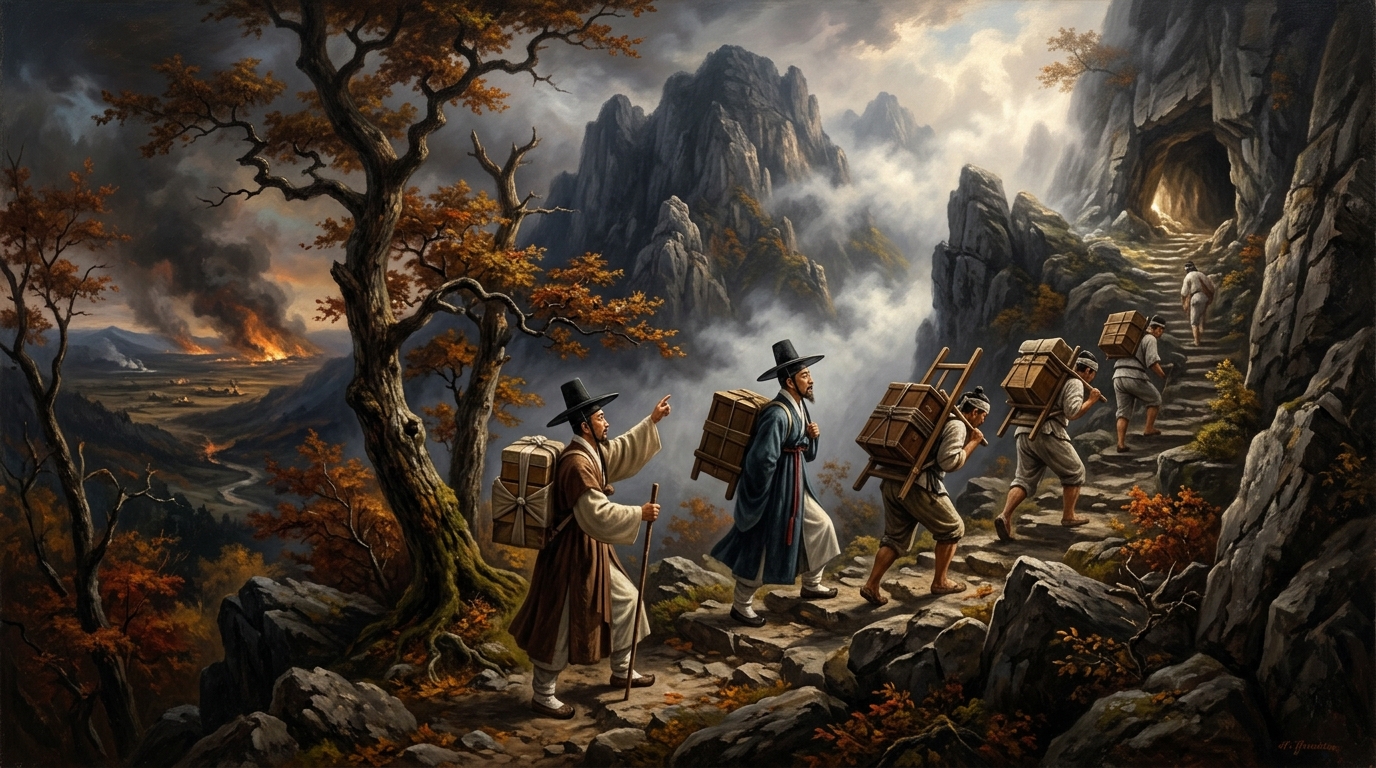
▲ [여정 안내] 다음 스팟으로의 길: 피랍의 바다 서해안에서 민족의 기록을 지켜낸 내장산 험준한 암벽으로 이어지는 여정
[Chapter 09] Piercing Winds Over Noryeong & Western Coast — 10,040 Severed Noses
Chapter 9: The Gale of Noryeong and Agony of the Western Coast — 10,040 Noses and the Sea of Captives
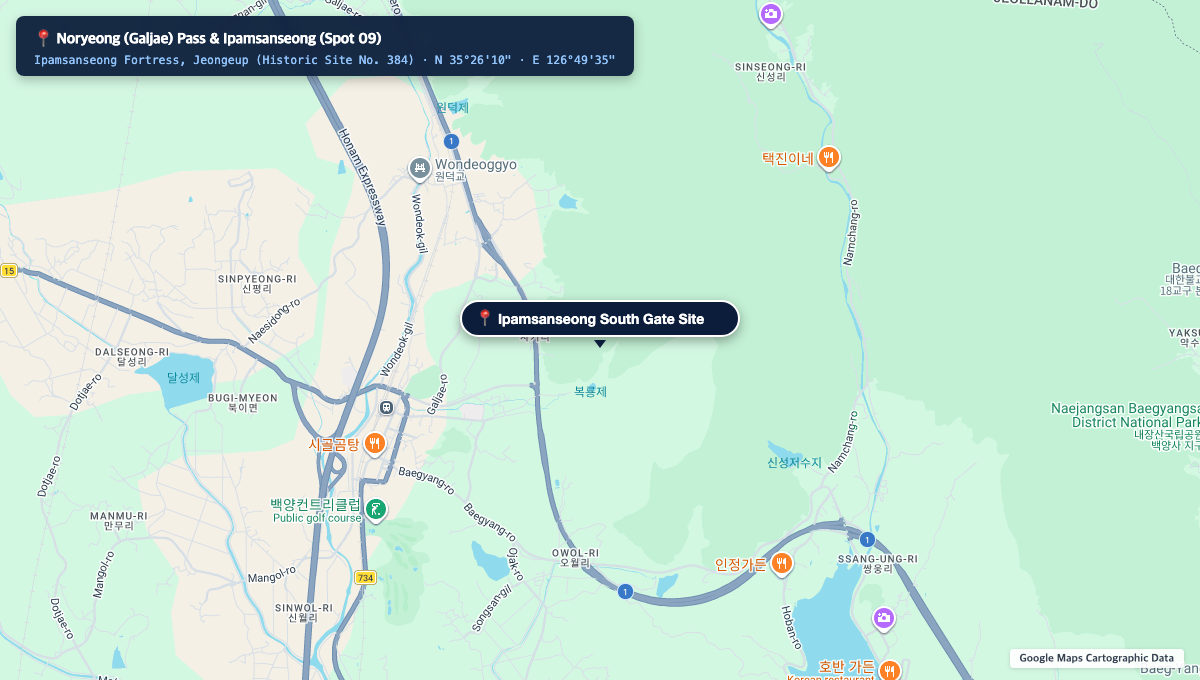
▲ [Field Survey Map] Modern GPS Coordinates of Noryeong Galjae Pass and Ipbamsanseong Fortress (Historic Site No. 384) (Based on Google Maps)
Location: Ipbamsanseong Fortress, Jangseong-gun & Beopseongpo / Hampyeong Bay, Jeollanam-do (N 35°26'10" · E 126°51'20")
Historical Era: Late Autumn (September–October) 1597
Key Figures: Fortress Commander Yun Jin (尹軫, 1558–1597), Displaced Captives, Luís Fróis, Antonio Corea
1. Spot Map Opening The Tragic Soil Where 10,040 Noses Were Salted
Where do we stand? At the southern gate ruins of Ipbamsanseong Fortress atop Noryeong Galjae Pass, and along the tidal estuaries of Beopseongpo and Hampyeong Bay on the western coast of Jeolla Province.
Following the fall of Namwon Fortress, Japanese forces fanned out across the agricultural plains of Honam. Commander Yun Jin defended Ipbamsanseong at the strategic mountain pass until he and his garrison fell in battle. In the wake of military operations, advancing forces executed harsh trophy-harvesting policies, with official military receipts recording the collection of over 10,040 severed noses from the region. Furthermore, thousands of civilian captives were assembled at coastal ports and transported across the sea to Japan, where many were swept into global slave trade networks through port cities such as Nagasaki.
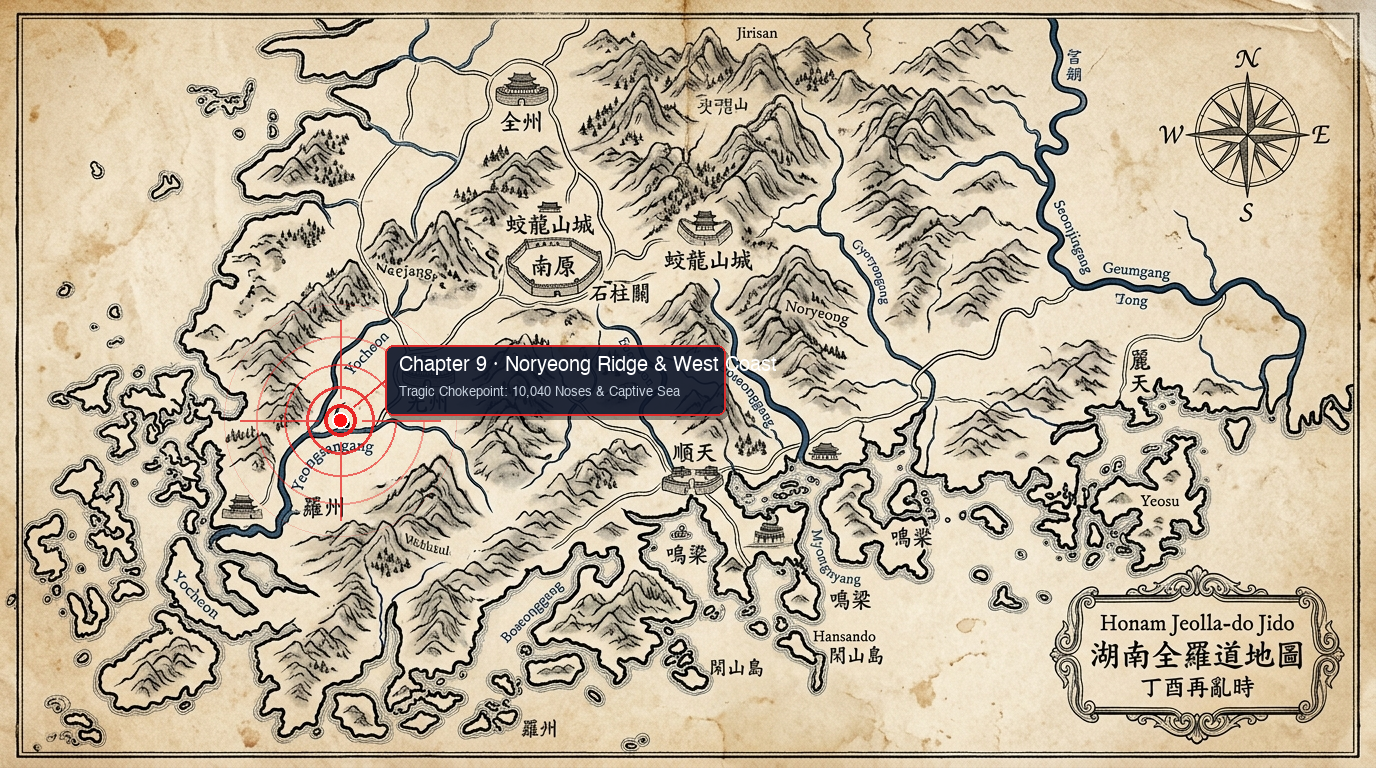
▲ [Spot Location Map] Ipbamsanseong Fortress and Coastal Captive Routes — Mapping the pass defense at Ipbamsanseong and the maritime captive routes leading through coastal ports like Beopseongpo toward Japan.
2. Timeline of Eras and Key Figures Wartime Plunder and the Captive Diaspora
| Historical Phase | Wartime Trophy Directives | Ipbamsanseong Defense | Official Trophy Receipt Issued | Coastal Transport to Japan | Global Diaspora & International Records |
|---|---|---|---|---|---|
| Era / Year | Summer 1597 | Early September 1597 | September 28, 1597 | Autumn 1597 – 1598 | 1598 – Early 1600s |
| Key Event | Trophy policy demands noses preserved in salt | Yun Jin falls defending the mountain pass | Official receipt for 10,040 noses issued | Captives transported via coastal ports to Japan | Korean captives in Nagasaki; Carletti records |
| Significance | Widespread atrocities targeting civilian population | Heroic pass defense sheltering refugees | Documentary evidence of wartime atrocities | Mass displacement of Korean civilians | International records and scholarly discourse on Rubens' drawing |
3. Fact-Centered Historical Narrative
1. Yun Jin and the Defense of Ipbamsanseong
Guarding the strategic road through Noryeong Pass between northern and southern Jeolla, Magistrate Yun Jin sheltered thousands of refugees within Ipbamsanseong Fortress. Outflanked by Japanese forces, Yun and his troops fought tenaciously until they fell in close combat. His resistance provided vital time for civilians to seek refuge in surrounding mountain valleys.
▲ [Historic Site Plate] South Gate Bastions of Ipbamsanseong Fortress (Historic Site No. 384) — The rugged stone gateway where Yun Jin and his garrison made their final stand.
2. 'Receipt for 10,040 Noses' — Monk Keinen's Eyewitness Diary and Wartime Trophies
Unable to transport heavy severed heads across the sea, Japanese commanders demanded salted human noses as physical proof of military encounters. Buddhist monk Keinen, who accompanied the invasion forces as a chaplain and physician, recorded the harrowing human toll in his diary, Joseon Nichinichiki (朝鮮日々記):
"Binding children with cords and striking parents down to separate them, their cries of anguish resembled the torments of sinners in hell."
"Inside the fortress, people were cut down without mercy; dead bodies littered the roads like grains of sand, a scene too painful for human eyes to behold."
— Buddhist Monk Keinen, Joseon Nichinichiki (August 1597)
Japanese military inspectors counted salted noses delivered from the field and issued formal receipts (bisei-shushō). On September 28, 1597, an official receipt acknowledged "10,040 noses" delivered by troops under Yoshimi Hiroyuki. These trophies were transported to Japan and interred at the Mimizuka (Ear/Nose Mound) in Kyoto opposite Toyokuni Shrine.
▲ [Historical Document Plate] Official Japanese Receipt for 10,040 Severed Noses (Historiographical Institute, University of Tokyo) — Documentary evidence illustrating the wartime trophy collection during the 1597 invasion.
▲ [Historic Site Plate] The Mimizuka (Ear Mound) in Kyoto, Japan — The earthen tumulus where harvested noses and ears brought to Japan during the 1597 campaign were interred beneath a stone stupa.
3. Coastal Ports and the International Captive Diaspora
Captives spared from trophy-harvesting were gathered and marched to coastal ports along the western and southern coastlines, including Beopseongpo and Hampyeong Bay, to be transported to Japan. In international trade hubs like Nagasaki, foreign merchants, including Portuguese traders, operated alongside local brokers.
Portuguese Jesuit missionary Luís Fróis documented in his Historia de Iapam the tragic conditions of Korean captives being bought and sold in Japanese ports. Italian merchant Francesco Carletti recorded in his travelogue that he purchased five Korean captives in Nagasaki, eventually bringing one—baptized as Antonio Corea—to Florence.
Separately, Peter Paul Rubens' celebrated drawing Man in Korean Costume (Getty Museum) has long drawn scholarly interest regarding the presence of Koreans in 17th-century Europe. While the Getty Museum notes the Korean characteristics of the costume, the identity of the model remains unconfirmed by historical records, and equating the figure directly with Antonio Corea remains a hypothesis.
▲ [Museum Art Plate] Visual Records Reflecting the Maritime Captive Diaspora — Juxtaposing Kano Naizen's screen painting depicting Nanban trade vessels with Rubens' master drawing Man in Korean Costume (Getty Museum), illustrating the international dispersal of wartime captives and subsequent European artistic interest.
4. 8-Cut Comic Storytelling Narrative — 10,040 Noses and the Sea of Captives
This 8-panel graphic narrative depicts the darkest horrors of the 1597 invasion, from Yun Jin's heroic sacrifice to the tragedy of the slave fleets.
- The Fall of Galjae and Yun Jin's Martyrdom (Cuts 1–3): At Ipbamsanseong's gate, Commander Yun Jin roars defiance: "Not a single citizen shall be taken while I breathe!" He falls under musket volleys, buying precious hours for fleeing families.
- The Severing of Noses and the Red Ink Receipt (Cuts 4–6): Invaders raid undefended hamlets, severing noses from victims and salting them into sacks. Japanese officers stamp red seals on official paperwork recording "10,040 noses received," exposing the state-sanctioned nature of the atrocity.
- Chained at the Water's Edge (Cuts 7–8): Mothers and children bound in iron chains are forced aboard Portuguese black ships and pirate vessels at Beopseongpo. Weeping figures look back toward their burning homeland as the ships sail over the horizon. The Mimizuka in Kyoto stands as an eternal witness against war's cruelty.
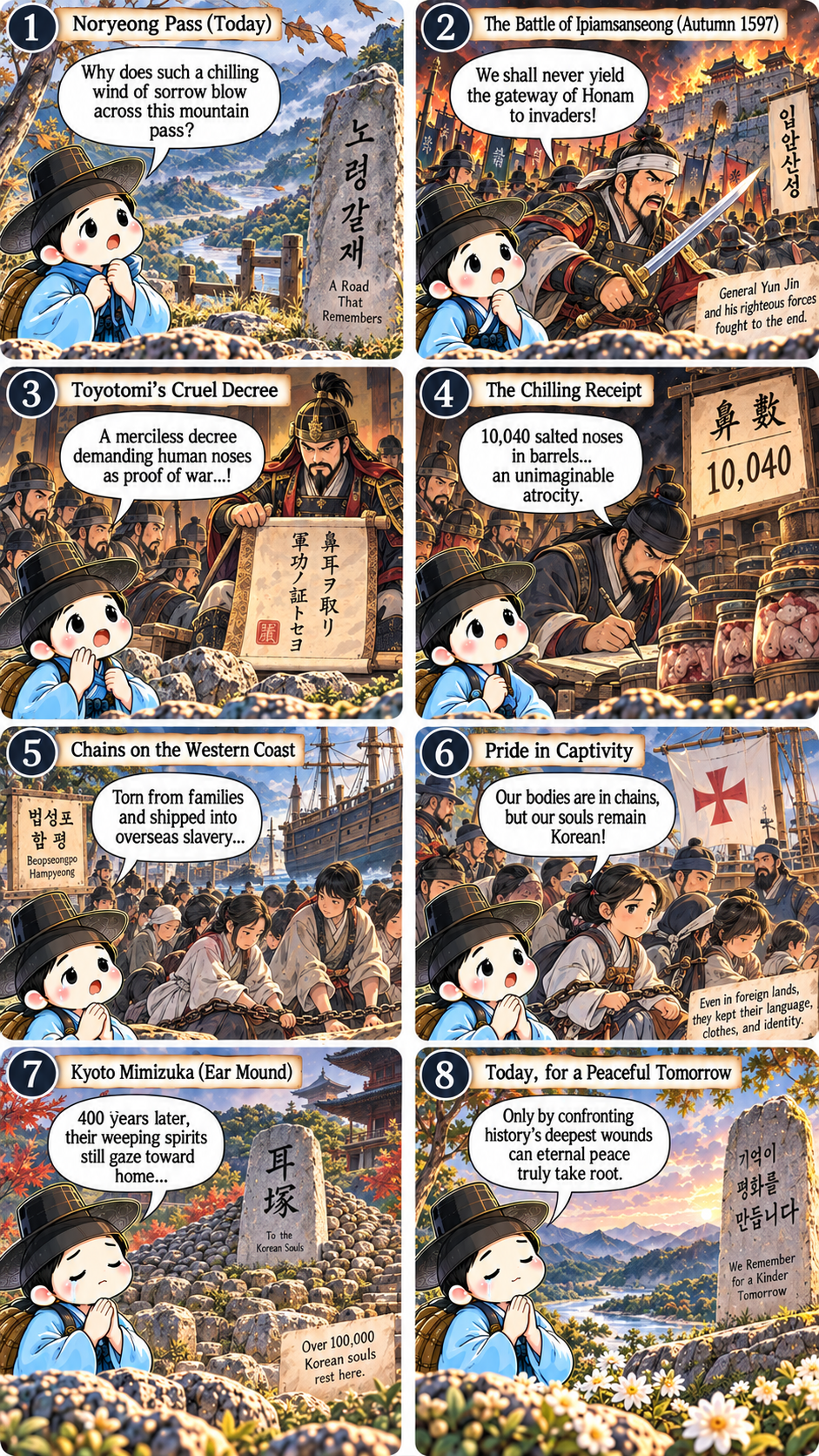
▲ [8-Cut Comic Reels] Chapter 9: Noryeong Gale and the Sea of Captives
5. Link to the Next Spot — Preserving the Soul of a Nation on Mountain Cliffs
Amid invasion and enslavement, courageous scholars resolved that Korea's historical soul would never perish. Two elderly scholars carried 64 crates of the Veritable Records of the Joseon Dynasty up sheer mountain cliffs into Naejangsan's caves, guarding them for 370 days. We advance to [Chapter 10: The Province May Fall, But History Climbs the Mountain: Jeonju Gyeonggijeon to Mt. Naejangsan].
▲ [Narrative Bridge] Pathway to the Next Spot: From the Plundered Coastal Estuaries to the Hidden Cliff Sanctuaries of Mt. Naejangsan Protecting the Nation's Annals


